Tenofovir
Editor-In-Chief: C. Michael Gibson, M.S., M.D. [1]; Associate Editor(s)-in-Chief: Vignesh Ponnusamy, M.B.B.S. [2]
WikiDoc MAKES NO GUARANTEE OF VALIDITY. WikiDoc is not a professional health care provider, nor is it a suitable replacement for a licensed healthcare provider. WikiDoc is intended to be an educational tool, not a tool for any form of healthcare delivery. The educational content on WikiDoc drug pages is based upon the FDA package insert, National Library of Medicine content and practice guidelines / consensus statements. WikiDoc does not promote the administration of any medication or device that is not consistent with its labeling. Please read our full disclaimer here.
Black Box Warning
|
WARNING: LACTIC ACIDOSIS/SEVERE HEPATOMEGALY WITH STEATOSIS and POST TREATMENT EXACERBATION OF HEPATITIS
See full prescribing information for complete Boxed Warning.
|
Overview
Tenofovir is a nucleotide reverse transcriptase inhibitor that is FDA approved for the treatment of HIV-1 infection in adults and pediatric patients 2 years of age and older, chronic hepatitis B in adults and pediatric patients 12 years of age and older. There is a Black Box Warning for this drug as shown here. Common adverse reactions include rash, diarrhea, headache, pain, depression, asthenia, and nausea.
Adult Indications and Dosage
FDA-Labeled Indications and Dosage (Adult)
HIV-1 Infection
- Dosing Information
- The dose is one 300 mg tenofovir tablet once daily taken orally, without regard to food.
Chronic Hepatitis B
- Dosing Information
- The dose is one 300 mg tenofovir tablet once daily taken orally, without regard to food.
Off-Label Use and Dosage (Adult)
Guideline-Supported Use
HIV infection - Type B viral hepatitis, chronic
- Developed by: The Department of Health and Human Services Panel on Antiretroviral Guidelines and the American Association for the Study of Liver Diseases (AASLD)
- Class of Recommendation: Adult, Class IIa
- Strength of Evidence: Adult, Category B
- Dosing Information
- Tenofovir 300 mg/day[1]
Non–Guideline-Supported Use
There is limited information regarding Off-Label Non–Guideline-Supported Use of Tenofovir in adult patients.
Pediatric Indications and Dosage
FDA-Labeled Indications and Dosage (Pediatric)
HIV-1 Infection
- Pediatric Patients 12 Years of Age and Older (35 kg or more)
- The dose is one 300 mg tenofovir tablet once daily taken orally, without regard to food.
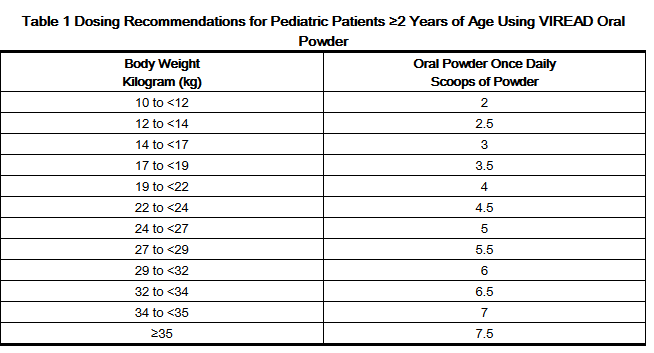
- For the treatment of HIV-1 in pediatric patients 2 years of age and older, the recommended oral dose of tenofovir is 8 mg of tenofovir disoproxil fumarate per kilogram of body weight (up to a maximum of 300 mg) once daily administered as oral powder or tablets.
- Tenofovir oral powder should be measured only with the supplied dosing scoop. One level scoop delivers 1 g of powder which contains 40 mg of tenofovir disoproxil fumarate. Tenofovir oral powder should be mixed in a container with 2 to 4 ounces of soft food not requiring chewing (e.g., applesauce, baby food, yogurt). The entire mixture should be ingested immediately to avoid a bitter taste. Do not administer tenofovir oral powder in a liquid as the powder may float on top of the liquid even after stirring. Further patient instructions on how to administer tenofovir oral powder with the supplied dosing scoop are provided in the FDA-approved patient labeling (Patient Information).
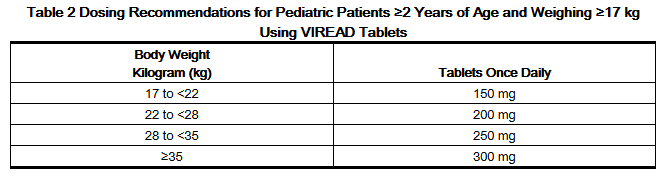
- Tenofovir is also available as tablets in 150, 200, 250 and 300 mg strengths for pediatric patients who weigh greater than or equal to 17 kg and who are able to reliably swallow intact tablets. The dose is one tablet once daily taken orally, without regard to food.
- Tables 1 and 2 contain dosing recommendations for tenofovir oral powder and tablets based on body weight. Weight should be monitored periodically and the tenofovir dose adjusted accordingly.
This image is provided by the National Library of Medicine.

This image is provided by the National Library of Medicine.

Chronic Hepatitis B
- Pediatric Patients 12 Years of Age and Older (35 kg or more)
- The dose is one 300 mg tenofovir tablet once daily taken orally, without regard to food.
Off-Label Use and Dosage (Pediatric)
Guideline-Supported Use
There is limited information regarding Off-Label Guideline-Supported Use of Tenofovir in pediatric patients.
Non–Guideline-Supported Use
There is limited information regarding Off-Label Non–Guideline-Supported Use of Tenofovir in pediatric patients.
Contraindications
- None
Warnings
|
WARNING: LACTIC ACIDOSIS/SEVERE HEPATOMEGALY WITH STEATOSIS and POST TREATMENT EXACERBATION OF HEPATITIS
See full prescribing information for complete Boxed Warning.
|
Precautions
- Lactic Acidosis/Severe Hepatomegaly with Steatosis
- Lactic acidosis and severe hepatomegaly with steatosis, including fatal cases, have been reported with the use of nucleoside analogs, including tenofovir, in combination with other antiretrovirals. A majority of these cases have been in women. Obesity and prolonged nucleoside exposure may be risk factors. Particular caution should be exercised when administering nucleoside analogs to any patient with known risk factors for liver disease; however, cases have also been reported in patients with no known risk factors. Treatment with tenofovir should be suspended in any patient who develops clinical or laboratory findings suggestive of lactic acidosis or pronounced hepatotoxicity (which may include hepatomegaly and steatosis even in the absence of marked transaminase elevations).
- Exacerbation of Hepatitis after Discontinuation of Treatment
- Discontinuation of anti-HBV therapy, including tenofovir, may be associated with severe acute exacerbations of hepatitis. Patients infected with HBV who discontinue tenofovir should be closely monitored with both clinical and laboratory follow-up for at least several months after stopping treatment. If appropriate, resumption of anti-hepatitis B therapy may be warranted.
- New Onset or Worsening Renal Impairment
- Tenofovir is principally eliminated by the kidney. Renal impairment, including cases of acute renal failure and Fanconi syndrome (renal tubular injury with severe hypophosphatemia), has been reported with the use of tenofovir.
- It is recommended that estimated creatinine clearance be assessed in all patients prior to initiating therapy and as clinically appropriate during therapy with tenofovir. In patients at risk of renal dysfunction, including patients who have previously experienced renal events while receiving HEPSERA®, it is recommended that estimated creatinine clearance, serum phosphorus, urine glucose, and urine protein be assessed prior to initiation of tenofovir, and periodically during tenofovir therapy.
- Dosing interval adjustment of tenofovir and close monitoring of renal function are recommended in all patients with creatinine clearance below 50 mL/min. No safety or efficacy data are available in patients with renal impairment who received tenofovir using these dosing guidelines, so the potential benefit of tenofovir therapy should be assessed against the potential risk of renal toxicity.
- Tenofovir should be avoided with concurrent or recent use of a nephrotoxic agent (e.g., high-dose or multiple non-steroidal anti-inflammatory drugs (NSAIDs)). Cases of acute renal failure after initiation of high dose or multiple NSAIDs have been reported in HIV-infected patients with risk factors for renal dysfunction who appeared stable on tenofovir DF. Some patients required hospitalization and renal replacement therapy. Alternatives to NSAIDs should be considered, if needed, in patients at risk for renal dysfunction.
- Persistent or worsening bone pain, pain in extremities, fractures and/or muscular pain or weakness may be manifestations of proximal renal tubulopathy and should prompt an evaluation of renal function in at-risk patients.
- Coadministration with Other Products
- Tenofovir should not be used in combination with the fixed-dose combination products ATRIPLA, COMPLERA, STRIBILD, or TRUVADA since tenofovir disoproxil fumarate is a component of these products.
- Tenofovir should not be administered in combination with HEPSERA (adefovir dipivoxil).
- Patients Coinfected with HIV-1 and HBV
- Due to the risk of development of HIV-1 resistance, tenofovir should only be used in HIV-1 and HBV coinfected patients as part of an appropriate antiretroviral combination regimen.
- HIV-1 antibody testing should be offered to all HBV-infected patients before initiating therapy with tenofovir. It is also recommended that all patients with HIV-1 be tested for the presence of chronic hepatitis B before initiating treatment with tenofovir.
- Bone Effects
- Bone Mineral Density:
- In clinical trials in HIV-1 infected adults, tenofovir was associated with slightly greater decreases in bone mineral density (BMD) and increases in biochemical markers of bone metabolism, suggesting increased bone turnover relative to comparators. Serum parathyroid hormone levels and 1,25 Vitamin D levels were also higher in subjects receiving tenofovir.
- Clinical trials evaluating tenofovir in pediatric and adolescent subjects were conducted. Under normal circumstances, BMD increases rapidly in pediatric patients. In HIV-1 infected subjects aged 2 years to less than 18 years, bone effects were similar to those observed in adult subjects and suggest increased bone turnover. Total body BMD gain was less in the tenofovir-treated HIV-1 infected pediatric subjects as compared to the control groups. Similar trends were observed in chronic hepatitis B infected adolescent subjects aged 12 years to less than 18 years. In all pediatric trials, skeletal growth (height) appeared to be unaffected.
- The effects of tenofovir-associated changes in BMD and biochemical markers on long-term bone health and future fracture risk are unknown. Assessment of BMD should be considered for adults and pediatric patients who have a history of pathologic bone fracture or other risk factors for osteoporosis or bone loss. Although the effect of supplementation with calcium and vitamin D was not studied, such supplementation may be beneficial for all patients. If bone abnormalities are suspected then appropriate consultation should be obtained.
- Bone Mineral Density:
- Mineralization Defects:
- Cases of osteomalacia associated with proximal renal tubulopathy, manifested as bone pain or pain in extremities and which may contribute to fractures, have been reported in association with the use of tenofovir. Arthralgias and muscle pain or weakness have also been reported in cases of proximal renal tubulopathy. Hypophosphatemia and osteomalacia secondary to proximal renal tubulopathy should be considered in patients at risk of renal dysfunction who present with persistent or worsening bone or muscle symptoms while receiving products containing tenofovir DF.
- Mineralization Defects:
- Fat Redistribution
- In HIV-infected patients redistribution/accumulation of body fat including central obesity, dorsocervical fat enlargement (buffalo hump), peripheral wasting, facial wasting, breast enlargement, and "cushingoid appearance" have been observed in patients receiving combination antiretroviral therapy. The mechanism and long-term consequences of these events are currently unknown. A causal relationship has not been established.
- Immune Reconstitution Syndrome
- Immune reconstitution syndrome has been reported in HIV-infected patients treated with combination antiretroviral therapy, including tenofovir. During the initial phase of combination antiretroviral treatment, patients whose immune system responds may develop an inflammatory response to indolent or residual opportunistic infections [such as Mycobacterium avium infection, cytomegalovirus, Pneumocystis jirovecii pneumonia (PCP), or tuberculosis], which may necessitate further evaluation and treatment.
- Autoimmune disorders (such as Graves' disease, polymyositis, and Guillain-Barré syndrome) have also been reported to occur in the setting of immune reconstitution, however, the time to onset is more variable, and can occur many months after initiation of treatment.
- Early Virologic Failure
- Clinical trials in HIV-infected subjects have demonstrated that certain regimens that only contain three nucleoside reverse transcriptase inhibitors (NRTI) are generally less effective than triple drug regimens containing two NRTIs in combination with either a non-nucleoside reverse transcriptase inhibitor or a HIV-1 protease inhibitor. In particular, early virological failure and high rates of resistance substitutions have been reported. Triple nucleoside regimens should therefore be used with caution. Patients on a therapy utilizing a triple nucleoside-only regimen should be carefully monitored and considered for treatment modification.
Adverse Reactions
Clinical Trials Experience
- Because clinical trials are conducted under widely varying conditions, adverse reaction rates observed in the clinical trials of a drug cannot be directly compared to rates in the clinical trials of another drug and may not reflect the rates observed in practice.
Clinical Trials in Adult Patients with HIV-1 Infection
- More than 12,000 subjects have been treated with tenofovir alone or in combination with other antiretroviral medicinal products for periods of 28 days to 215 weeks in clinical trials and expanded access programs. A total of 1,544 subjects have received tenofovir 300 mg once daily in clinical trials; over 11,000 subjects have received tenofovir in expanded access programs.
- The most common adverse reactions (incidence greater than or equal to 10%, Grades 2–4) identified from any of the 3 large controlled clinical trials include rash, diarrhea, headache, pain, depression, asthenia, and nausea.
- Treatment-Naïve Patients
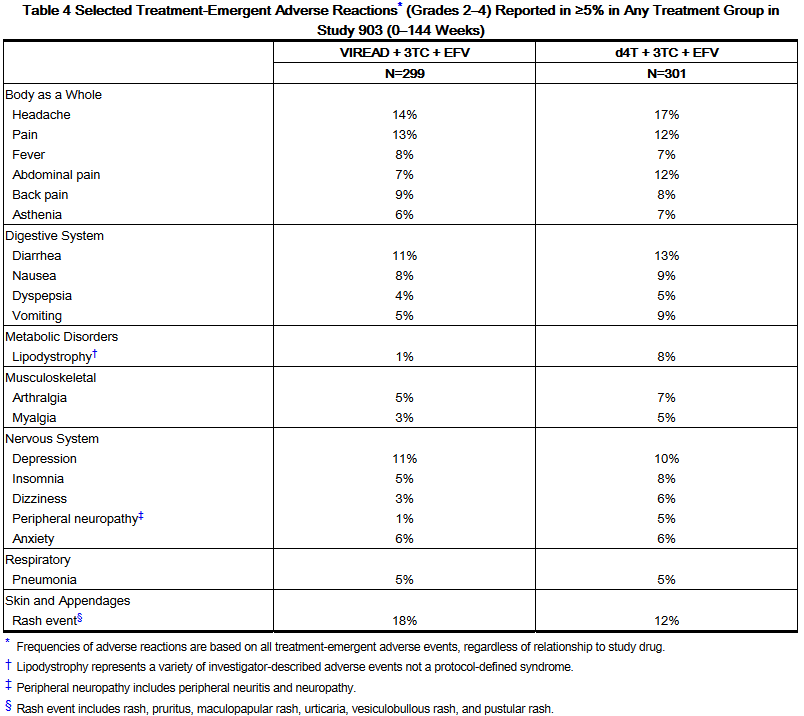
- Study 903 - Treatment-Emergent Adverse Reactions: The most common adverse reactions seen in a double-blind comparative controlled trial in which 600 treatment-naïve subjects received tenofovir (N=299) or stavudine (N=301) in combination with lamivudine and efavirenz for 144 weeks (Study 903) were mild to moderate gastrointestinal events and dizziness.
- Mild adverse reactions (Grade 1) were common with a similar incidence in both arms, and included dizziness, diarrhea, and nausea. Selected treatment-emergent moderate to severe adverse reactions are summarized in Table 4.
This image is provided by the National Library of Medicine.

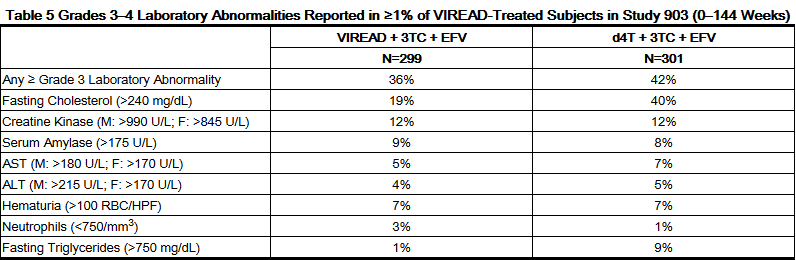
- Laboratory Abnormalities: With the exception of fasting cholesterol and fasting triglyceride elevations that were more common in the stavudine group (40% and 9%) compared with tenofovir (19% and 1%) respectively, laboratory abnormalities observed in this trial occurred with similar frequency in the tenofovir and stavudine treatment arms. A summary of Grades 3–4 laboratory abnormalities is provided in Table 5.
This image is provided by the National Library of Medicine.

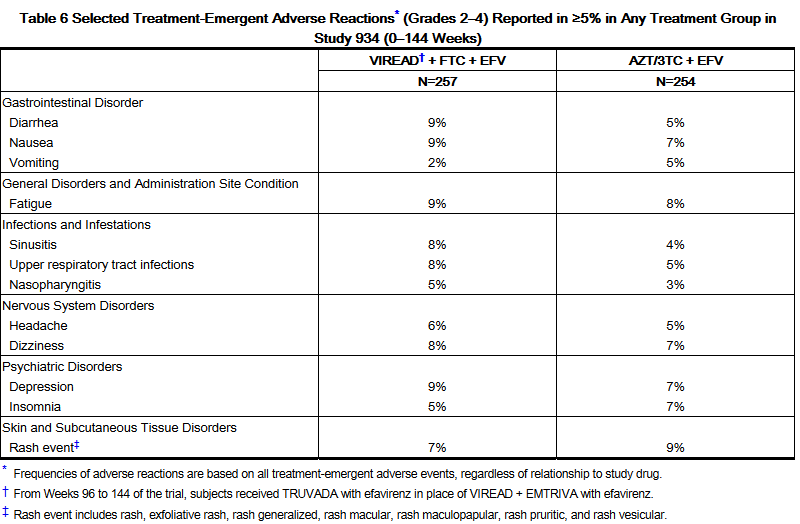
- Study 934 - Treatment Emergent Adverse Reactions: In Study 934, 511 antiretroviral-naïve subjects received either tenofovir + EMTRIVA® administered in combination with efavirenz (N=257) or zidovudine/lamivudine administered in combination with efavirenz (N=254). Adverse reactions observed in this trial were generally consistent with those seen in previous studies in treatment-experienced or treatment-naïve subjects (Table 6).
- Changes in Bone Mineral Density:
- In HIV-1 infected adult subjects in Study 903, there was a significantly greater mean percentage decrease from baseline in BMD at the lumbar spine in subjects receiving tenofovir + lamivudine + efavirenz (-2.2% ± 3.9) compared with subjects receiving stavudine + lamivudine + efavirenz (-1.0% ± 4.6) through 144 weeks. Changes in BMD at the hip were similar between the two treatment groups (-2.8% ± 3.5 in the tenofovir group vs. -2.4% ± 4.5 in the stavudine group). In both groups, the majority of the reduction in BMD occurred in the first 24–48 weeks of the trial and this reduction was sustained through Week 144. Twenty-eight percent of tenofovir-treated subjects vs. 21% of the stavudine-treated subjects lost at least 5% of BMD at the spine or 7% of BMD at the hip. Clinically relevant fractures (excluding fingers and toes) were reported in 4 subjects in the tenofovir group and 6 subjects in the stavudine group. In addition, there were significant increases in biochemical markers of bone metabolism (serum bone-specific alkaline phosphatase, serum osteocalcin, serum C telopeptide, and urinary N telopeptide) and higher serum parathyroid hormone levels and 1,25 Vitamin D levels in the tenofovir group relative to the stavudine group; however, except for bone-specific alkaline phosphatase, these changes resulted in values that remained within the normal range.
This image is provided by the National Library of Medicine.

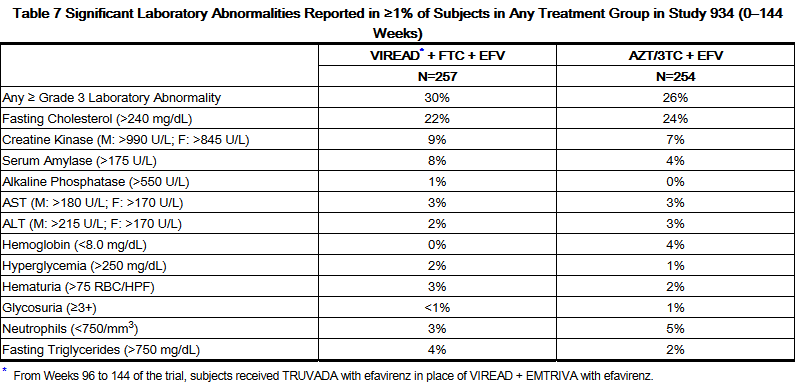
- Laboratory Abnormalities: Laboratory abnormalities observed in this trial were generally consistent with those seen in previous trials (Table 7).
This image is provided by the National Library of Medicine.

- Treatment-Experienced Patients
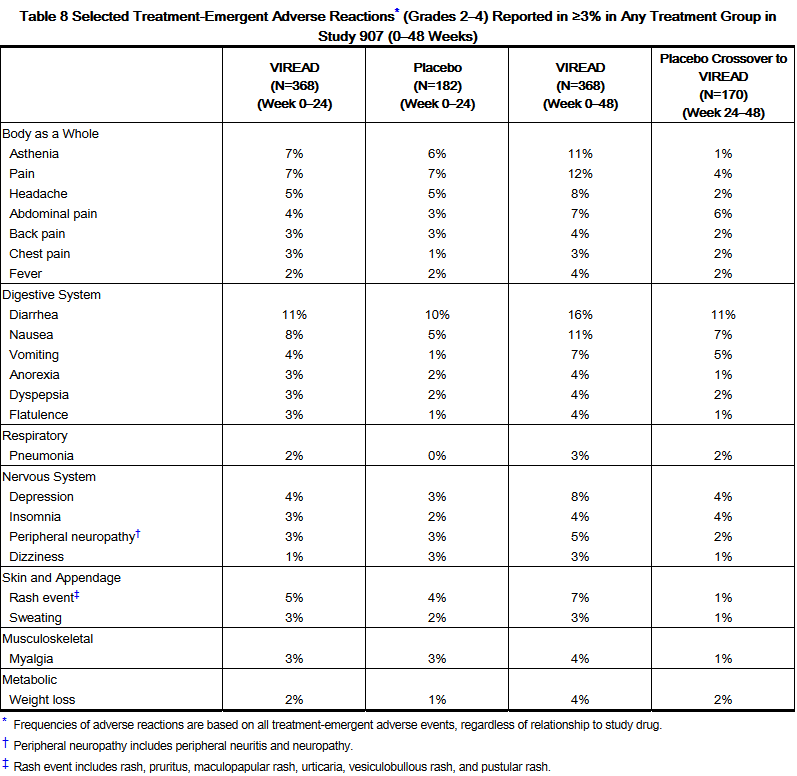
- Treatment-Emergent Adverse Reactions: The adverse reactions seen in treatment experienced subjects were generally consistent with those seen in treatment naïve subjects including mild to moderate gastrointestinal events, such as nausea, diarrhea, vomiting, and flatulence. Less than 1% of subjects discontinued participation in the clinical trials due to gastrointestinal adverse reactions (Study 907).
- A summary of moderate to severe, treatment-emergent adverse reactions that occurred during the first 48 weeks of Study 907 is provided in Table 8.
This image is provided by the National Library of Medicine.

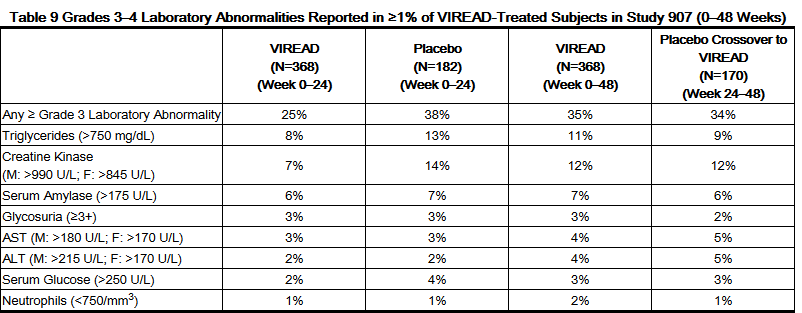
- Laboratory Abnormalities: Laboratory abnormalities observed in this trial occurred with similar frequency in the tenofovir and placebo-treated groups. A summary of Grades 3–4 laboratory abnormalities is provided in Table 9.
This image is provided by the National Library of Medicine.

Clinical Trials in Pediatric Subjects 2 Years of Age and Older with HIV-1 Infection
- Assessment of adverse reactions is based on two randomized trials (Studies 352 and 321) in 184 HIV-1 infected pediatric subjects (2 to less than 18 years of age) who received treatment with tenofovir (N=93) or placebo/active comparator (N=91) in combination with other antiretroviral agents for 48 weeks. The adverse reactions observed in subjects who received treatment with tenofovir were consistent with those observed in clinical trials in adults.
- Eighty-nine pediatric subjects (2 to less than 12 years of age) received tenofovir in Study 352 for a median exposure of 104 weeks. Of these, 4 subjects discontinued from the trial due to adverse reactions consistent with proximal renal tubulopathy. Three of these 4 subjects presented with hypophosphatemia and also had decreases in total body or spine BMD Z score.
- Changes in Bone Mineral Density:
- Clinical trials in HIV-1 infected children and adolescents evaluated BMD changes. In Study 321 (12 to less than 18 years), the mean rate of BMD gain at Week 48 was less in the tenofovir compared to the placebo treatment group. Six tenofovir treated subjects and one placebo treated subject had significant (greater than 4%) lumbar spine BMD loss at Week 48. Changes from baseline BMD Z-scores were –0.341 for lumbar spine and –0.458 for total body in the 28 subjects who were treated with tenofovir for 96 weeks. In Study 352 (2 to less than 12 years), the mean rate of BMD gain in lumbar spine at Week 48 was similar between the Tenofovir and the d4T or AZT treatment groups. Total body BMD gain was less in the Tenofovir compared to the d4T or AZT treatment groups. One Tenofovir-treated subject and none of the d4T or AZT-treated subjects experienced significant (greater than 4%) lumbar spine BMD loss at Week 48. Changes from baseline in BMD Z scores were –0.012 for lumbar spine and –0.338 for total body in the 64 subjects who were treated with Tenofovir for 96 weeks. In both trials, skeletal growth (height) appeared to be unaffected.
Clinical Trials in Adult Subjects with Chronic Hepatitis B and Compensated Liver Disease
- Treatment-Emergent Adverse Reactions: In controlled clinical trials in 641 subjects with chronic hepatitis B (0102 and 0103), more subjects treated with Tenofovir during the 48-week double-blind period experienced nausea: 9% with Tenofovir versus 2% with HEPSERA. Other treatment-emergent adverse reactions reported in more than 5% of subjects treated with Tenofovir included: abdominal pain, diarrhea, headache, dizziness, fatigue, nasopharyngitis, back pain and skin rash.
- During the open-label phase of treatment with Tenofovir (weeks 48–240) in Studies 0102 and 0103, less than 1% of subjects (5/585) experienced a confirmed increase in serum creatinine of 0.5 mg/dL from baseline. No significant change in the tolerability profile was observed with continued treatment for up to 240 weeks.
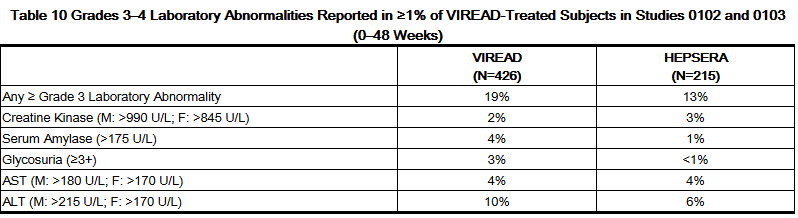
- Laboratory Abnormalities: A summary of Grades 3–4 laboratory abnormalities through Week 48 is provided in Table 10. Grades 3–4 laboratory abnormalities were similar in subjects continuing Tenofovir treatment for up to 240 weeks in these trials.
This image is provided by the National Library of Medicine.

- The overall incidence of on-treatment ALT flares (defined as serum ALT greater than 2 × baseline and greater than 10 × ULN, with or without associated symptoms) was similar between Tenofovir (2.6%) and HEPSERA (2%). ALT flares generally occurred within the first 4–8 weeks of treatment and were accompanied by decreases in HBV DNA levels. No subject had evidence of decompensation. ALT flares typically resolved within 4 to 8 weeks without changes in study medication.
- The adverse reactions observed in subjects with chronic hepatitis B and lamivudine resistance who received treatment with Tenofovir were consistent with those observed in other hepatitis B clinical trials in adults.
Clinical Trials in Adult Subjects with Chronic Hepatitis B and Decompensated Liver Disease
- In a small randomized, double-blind, active-controlled trial (0108), subjects with CHB and decompensated liver disease received treatment with Tenofovir or other antiviral drugs for up to 48 weeks. Among the 45 subjects receiving Tenofovir, the most frequently reported treatment-emergent adverse reactions of any severity were abdominal pain (22%), nausea (20%), insomnia (18%), pruritus (16%), vomiting (13%), dizziness (13%), and pyrexia (11%). Two of 45 (4%) subjects died through Week 48 of the trial due to progression of liver disease. Three of 45 (7%) subjects discontinued treatment due to an adverse event. Four of 45 (9%) subjects experienced a confirmed increase in serum creatinine of 0.5 mg/dL (1 subject also had a confirmed serum phosphorus less than 2 mg/dL through Week 48). Three of these subjects (each of whom had a Child-Pugh score greater than or equal to 10 and MELD score greater than or equal to 14 at entry) developed renal failure. Because both Tenofovir and decompensated liver disease may have an impact on renal function, the contribution of Tenofovir to renal impairment in this population is difficult to ascertain.
- One of 45 subjects experienced an on-treatment hepatic flare during the 48 Week trial.
Clinical Trials in Pediatric Subjects 12 Years of Age and Older with Chronic Hepatitis B
- Assessment of adverse reactions is based on one randomized study (Study GS-US-174-0115) in 106 pediatric subjects (12 to less than 18 years of age) infected with chronic hepatitis B receiving treatment with Tenofovir (N = 52) or placebo (N = 54) for 72 weeks. The adverse reactions observed in pediatric subjects who received treatment with Tenofovir were consistent with those observed in clinical trials of Tenofovir in adults.
- In this study, both the Tenofovir and placebo treatment arms experienced an overall increase in mean lumbar spine BMD over 72 weeks, as expected for an adolescent population. The BMD gains from baseline to Week 72 in lumbar spine and total body BMD in Tenofovir-treated subjects (+5% and +3%, respectively) were less than the BMD gains observed in placebo-treated subjects (+8% and +5%, respectively). Three subjects in the Tenofovir group and two subjects in the placebo group had significant (greater than 4%) lumbar spine BMD loss at Week 72. At baseline, mean BMD Z-scores in subjects randomized to Tenofovir were −0.43 for lumbar spine and −0.20 for total body, and mean BMD Z-scores in subjects randomized to placebo were −0.28 for lumbar spine and −0.26 for total body. In subjects receiving Tenofovir for 72 weeks, the mean change in BMD Z-score was −0.05 for lumbar spine and −0.15 for total body compared to +0.07 and +0.06, respectively, in subjects receiving placebo. As observed in pediatric studies of HIV-infected patients, skeletal growth (height) appeared to be unaffected.
Postmarketing Experience
- The following adverse reactions have been identified during postapproval use of Tenofovir. Because postmarketing reactions are reported voluntarily from a population of uncertain size, it is not always possible to reliably estimate their frequency or establish a causal relationship to drug exposure.
Immune System Disorders
- Allergic reaction, including angioedema.
Metabolism and Nutrition Disorders
Respiratory, Thoracic, and Mediastinal Disorders
Gastrointestinal Disorders
- Pancreatitis, increased amylase, abdominal pain.
Hepatobiliary Disorders
- Hepatic steatosis, hepatitis, increased liver enzymes (most commonly AST, ALT gamma GT).
Skin and Subcutaneous Tissue Disorders
- Rash.
Musculoskeletal and Connective Tissue Disorders
- Rhabdomyolysis, osteomalacia (manifested as bone pain and which may contribute to fractures), muscular weakness, myopathy.
Renal and Urinary Disorders
- Acute renal failure, renal failure, acute tubular necrosis, Fanconi syndrome, proximal renal tubulopathy, interstitial nephritis (including acute cases), nephrogenic diabetes insipidus, renal insufficiency, increased creatinine, proteinuria, polyuria.
General Disorders and Administration Site Conditions
- The following adverse reactions, listed under the body system headings above, may occur as a consequence of proximal renal tubulopathy:
Drug Interactions
- Didanosine
- Coadministration of Tenofovir and didanosine should be undertaken with caution and patients receiving this combination should be monitored closely for didanosine-associated adverse reactions. Didanosine should be discontinued in patients who develop didanosine-associated adverse reactions.
- When administered with Tenofovir, Cmax and AUC of didanosine increased significantly. The mechanism of this interaction is unknown. Higher didanosine concentrations could potentiate didanosine-associated adverse reactions, including pancreatitis and neuropathy. Suppression of CD4+ cell counts has been observed in patients receiving Tenofovir with didanosine 400 mg daily.
- In patients weighing greater than 60 kg, the didanosine dose should be reduced to 250 mg once daily when it is coadministered with Tenofovir. In patients weighing less than 60 kg, the didanosine dose should be reduced to 200 mg once daily when it is coadministered with Tenofovir. When coadministered, Tenofovir and didanosine EC may be taken under fasted conditions or with a light meal (less than 400 kcal, 20% fat). For additional information on coadministration of Tenofovir and didanosine, please refer to the full prescribing information for didanosine.
- HIV-1 Protease Inhibitors
- Tenofovir decreases the AUC and Cmin of atazanavir. When coadministered with Tenofovir, it is recommended that atazanavir 300 mg is given with ritonavir 100 mg. Tenofovir should not be coadministered with atazanavir without ritonavir.
- Lopinavir/ritonavir, atazanavir coadministered with ritonavir, and darunavir coadministered with ritonavir have been shown to increase tenofovir concentrations. Tenofovir disoproxil fumarate is a substrate of P-glycoprotein (Pgp) and breast cancer resistance protein (BCRP) transporters. When tenofovir disoproxil fumarate is co-administered with an inhibitor of these transporters, an increase in absorption may be observed. Patients receiving Tenofovir concomitantly with lopinavir/ritonavir, ritonavir-boosted atazanavir, or ritonavir-boosted darunavir should be monitored for Tenofovir-associated adverse reactions. Tenofovir should be discontinued in patients who develop Tenofovir-associated adverse reactions.
- Drugs Affecting Renal Function
- Since tenofovir is primarily eliminated by the kidneys, coadministration of Tenofovir with drugs that reduce renal function or compete for active tubular secretion may increase serum concentrations of tenofovir and/or increase the concentrations of other renally eliminated drugs. Some examples include, but are not limited to cidofovir, acyclovir, valacyclovir, ganciclovir, valganciclovir, aminoglycosides (e.g., gentamicin), and high-dose or multiple NSAIDs.
- In the treatment of chronic hepatitis B, Tenofovir should not be administered in combination with HEPSERA (adefovir dipivoxil).
Use in Specific Populations
Pregnancy
- Pregnancy Category B
- There are no adequate and well-controlled studies in pregnant women. Because animal reproduction studies are not always predictive of human response, Tenofovir should be used during pregnancy only if clearly needed.
- Antiretroviral Pregnancy Registry: To monitor fetal outcomes of pregnant women exposed to Tenofovir, an Antiretroviral Pregnancy Registry has been established. Healthcare providers are encouraged to register patients by calling 1-800-258-4263.
- Animal Data
- Reproduction studies have been performed in rats and rabbits at doses up to 14 and 19 times the human dose based on body surface area comparisons and revealed no evidence of impaired fertility or harm to the fetus due to tenofovir.
- Australian Drug Evaluation Committee (ADEC) Pregnancy Category
There is no Australian Drug Evaluation Committee (ADEC) guidance on usage of Tenofovir in women who are pregnant.
Labor and Delivery
There is no FDA guidance on use of Tenofovir during labor and delivery.
Nursing Mothers
- The Centers for Disease Control and Prevention recommend that HIV-1-infected mothers not breast-feed their infants to avoid risking postnatal transmission of HIV-1. Samples of breast milk obtained from five HIV-1 infected mothers in the first post-partum week show that tenofovir is secreted in human milk. The impact of this exposure in breastfed infants is unknown. Because of both the potential for HIV-1 transmission and the potential for serious adverse reactions in nursing infants, mothers should be instructed not to breast-feed if they are receiving Tenofovir.
Pediatric Use
- Pediatric Patients 2 Years of Age and Older with HIV-1 infection
- The safety of Tenofovir in pediatric patients aged 2 to less than 18 years is supported by data from two randomized trials in which Tenofovir was administered to HIV-1 infected treatment-experienced subjects. In addition, the pharmacokinetic profile of tenofovir in patients 2 to less than 18 years of age at the recommended doses was similar to that found to be safe and effective in adult clinical trials.
- In Study 352, 92 treatment-experienced subjects 2 to less than 12 years of age with stable, virologic suppression on stavudine- or zidovudine-containing regimen were randomized to either replace stavudine or zidovudine with Tenofovir (N = 44) or continue their original regimen (N = 48) for 48 weeks. Five additional subjects over the age of 12 were enrolled and randomized (Tenofovir N=4, original regimen N=1) but are not included in the efficacy analysis. After 48 weeks, all eligible subjects were allowed to continue in the study receiving open-label Tenofovir. At Week 48, 89% of subjects in the Tenofovir treatment group and 90% of subjects in the stavudine or zidovudine treatment group had HIV-1 RNA concentrations less than 400 copies/mL. During the 48 week randomized phase of the study, 1 subject in the Tenofovir group discontinued the study prematurely because of virologic failure/lack of efficacy and 3 subjects (2 subjects in the Tenofovir group and 1 subject in the stavudine or zidovudine group) discontinued for other reasons.
- In Study 321, 87 treatment-experienced subjects 12 to less than 18 years of age were treated with Tenofovir (N=45) or placebo (N=42) in combination with an optimized background regimen (OBR) for 48 weeks. The mean baseline CD4 cell count was 374 cells/mm3 and the mean baseline plasma HIV-1 RNA was 4.6 log10 copies/mL. At baseline, 90% of subjects harbored NRTI resistance-associated substitutions in their HIV-1 isolates. Overall, the trial failed to show a difference in virologic response between the Tenofovir and placebo treatment groups. Subgroup analyses suggest the lack of difference in virologic response may be attributable to imbalances between treatment arms in baseline viral susceptibility to Tenofovir and OBR.
- Although changes in HIV-1 RNA in these highly treatment-experienced subjects were less than anticipated, the comparability of the pharmacokinetic and safety data to that observed in adults supports the use of Tenofovir in pediatric patients 12 years of age and older who weigh greater than or equal to 35 kg and whose HIV-1 isolate is expected to be sensitive to Tenofovir.
- Safety and effectiveness of Tenofovir in pediatric patients younger than 2 years of age with HIV-1 infection have not been established.
- Pediatric Patients 12 Years of Age and Older with Chronic Hepatitis B
- In Study 115, 106 HBeAg negative (9%) and positive (91%) subjects aged 12 to less than 18 years with chronic HBV infection were randomized to receive blinded treatment with Tenofovir 300 mg (N = 52) or placebo (N = 54) for 72 weeks. At study entry, the mean HBV DNA was 8.1 log10 copies/mL and mean ALT was 101 U/L. Of 52 subjects treated with Tenofovir, 20 subjects were nucleos(t)ide-naïve and 32 subjects were nucleos(t)ide-experienced. Thirty-one of the 32 nucleos(t)ide-experienced subjects had prior lamivudine experience. At Week 72, 88% (46/52) of subjects in the Tenofovir group and 0% (0/54) of subjects in the placebo group had HBV DNA <400 copies/mL. Among subjects with abnormal ALT at baseline, 74% (26/35) of subjects receiving Tenofovir had normalized ALT at Week 72 compared to 31% (13/42) in the placebo group. One Tenofovir-treated subject experienced sustained HBsAg-loss and seroconversion to anti-HBs during the first 72 weeks of study participation.
- Safety and effectiveness of Tenofovir in pediatric patients younger than 12 years of age or less than 35 kg with chronic hepatitis B have not been established.
Geriatic Use
- Clinical trials of Tenofovir did not include sufficient numbers of subjects aged 65 and over to determine whether they respond differently from younger subjects. In general, dose selection for the elderly patient should be cautious, keeping in mind the greater frequency of decreased hepatic, renal, or cardiac function, and of concomitant disease or other drug therapy.
Gender
There is no FDA guidance on the use of Tenofovir with respect to specific gender populations.
Race
There is no FDA guidance on the use of Tenofovir with respect to specific racial populations.
Renal Impairment
- It is recommended that the dosing interval for Tenofovir be modified in patients with estimated creatinine clearance below 50 mL/min or in patients with ESRD who require dialysis.
Hepatic Impairment
There is no FDA guidance on the use of Tenofovir in patients with hepatic impairment.
Females of Reproductive Potential and Males
There is no FDA guidance on the use of Tenofovir in women of reproductive potentials and males.
Immunocompromised Patients
There is no FDA guidance one the use of Tenofovir in patients who are immunocompromised.
Administration and Monitoring
Administration
- Oral
Monitoring
- Routine monitoring of estimated creatinine clearance, serum phosphorus, urine glucose, and urine protein should be performed in patients with mild renal impairment.
- Bone mineral density monitoring should be considered in patients who have a history of pathologic bone fracture or at risk for osteopenia.
IV Compatibility
There is limited information regarding IV Compatibility of Tenofovir in the drug label.
Overdosage
Acute Overdose
Signs and Symptoms
- Limited clinical experience at doses higher than the therapeutic dose of Tenofovir 300 mg is available. In Study 901, 600 mg tenofovir disoproxil fumarate was administered to 8 subjects orally for 28 days. No severe adverse reactions were reported. The effects of higher doses are not known.
Management
- If overdose occurs the patient must be monitored for evidence of toxicity, and standard supportive treatment applied as necessary.
- Tenofovir is efficiently removed by hemodialysis with an extraction coefficient of approximately 54%. Following a single 300 mg dose of Tenofovir, a four-hour hemodialysis session removed approximately 10% of the administered tenofovir dose.
Chronic Overdose
There is limited information regarding Chronic Overdose of Tenofovir in the drug label.
Pharmacology

| |

| |
Tenofovir
| |
| Systematic (IUPAC) name | |
| ({[(2R)-1-(6-amino-9H-purin-9-yl)propan-2-yl]oxy}methyl)phosphonic acid | |
| Identifiers | |
| CAS number | |
| ATC code | J05 |
| PubChem | |
| DrugBank | |
| Chemical data | |
| Formula | Template:OrganicBox atomTemplate:OrganicBox atomTemplate:OrganicBoxTemplate:OrganicBoxTemplate:OrganicBoxTemplate:OrganicBoxTemplate:OrganicBoxTemplate:OrganicBoxTemplate:OrganicBoxTemplate:OrganicBoxTemplate:OrganicBoxTemplate:OrganicBoxTemplate:OrganicBoxTemplate:OrganicBox atomTemplate:OrganicBoxTemplate:OrganicBox atomTemplate:OrganicBox atomTemplate:OrganicBoxTemplate:OrganicBoxTemplate:OrganicBoxTemplate:OrganicBoxTemplate:OrganicBoxTemplate:OrganicBox |
| Mol. mass | 287.213 g/mol |
| SMILES | & |
| Pharmacokinetic data | |
| Bioavailability | 25% |
| Protein binding | < 1% |
| Metabolism | ? |
| Half life | 17 hours |
| Excretion | Renal |
| Therapeutic considerations | |
| Pregnancy cat. | |
| Legal status |
Prescription Only (S4)(AU) ?(CA) POM(UK) [[Prescription drug|Template:Unicode-only]](US) |
| Routes | Oral |
Mechanism of Action
- Tenofovir disoproxil fumarate is an acyclic nucleoside phosphonate diester analog of adenosine monophosphate. Tenofovir disoproxil fumarate requires initial diester hydrolysis for conversion to tenofovir and subsequent phosphorylations by cellular enzymes to form tenofovir diphosphate, an obligate chain terminator. Tenofovir diphosphate inhibits the activity of HIV-1 reverse transcriptase and HBV reverse transcriptase by competing with the natural substrate deoxyadenosine 5'-triphosphate and, after incorporation into DNA, by DNA chain termination. Tenofovir diphosphate is a weak inhibitor of mammalian DNA polymerases α, β, and mitochondrial DNA polymerase γ.
Structure
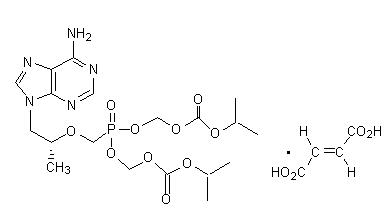
- Tenofovir is the brand name for tenofovir disoproxil fumarate (a prodrug of tenofovir) which is a fumaric acid salt of bis-isopropoxycarbonyloxymethyl ester derivative of tenofovir. In vivo tenofovir disoproxil fumarate is converted to tenofovir, an acyclic nucleoside phosphonate (nucleotide) analog of adenosine 5'-monophosphate. Tenofovir exhibits activity against HIV-1 reverse transcriptase.
- The chemical name of tenofovir disoproxil fumarate is 9-[(R)-2-bis(isopropoxycarbonyl)oxy]methoxy]phosphinyl]methoxy]propyl]adenine fumarate (1:1). It has a molecular formula of C19H30N5O10P • C4H4O4 and a molecular weight of 635.52. It has the following structural formula:
This image is provided by the National Library of Medicine.

- Tenofovir disoproxil fumarate is a white to off-white crystalline powder with a solubility of 13.4 mg/mL in distilled water at 25 °C. It has an octanol/phosphate buffer (pH 6.5) partition coefficient (log p) of 1.25 at 25 °C.
- Tenofovir is available as tablets or as an oral powder.
- Tenofovir tablets are for oral administration in strengths of 150, 200, 250, and 300 mg of tenofovir disoproxil fumarate, which are equivalent to 123, 163, 204 and 245 mg of tenofovir disoproxil, respectively. Each tablet contains the following inactive ingredients: croscarmellose sodium, lactose monohydrate, magnesium stearate, microcrystalline cellulose, and pregelatinized starch. The 300 mg tablets are coated with Opadry II Y–30–10671–A, which contains FD&C blue #2 aluminum lake, hypromellose 2910, lactose monohydrate, titanium dioxide, and triacetin. The 150, 200, and 250 mg tablets are coated with Opadry II 32K-18425, which contains hypromellose 2910, lactose monohydrate, titanium dioxide, and triacetin.
- Tenofovir oral powder is available for oral administration as white, taste-masked, coated granules containing 40 mg of tenofovir disoproxil fumarate per gram of oral powder, which is equivalent to 33 mg of tenofovir disoproxil. The oral powder contains the following inactive ingredients: mannitol, hydroxypropyl cellulose, ethylcellulose, and silicon dioxide.
- In this insert, all dosages are expressed in terms of tenofovir disoproxil fumarate except where otherwise noted.
Pharmacodynamics
There is limited information regarding Pharmacodynamics of Tenofovir in the drug label.
Pharmacokinetics
- The pharmacokinetics of tenofovir disoproxil fumarate have been evaluated in healthy volunteers and HIV-1 infected individuals. Tenofovir pharmacokinetics are similar between these populations.
- Absorption
- Tenofovir is a water soluble diester prodrug of the active ingredient tenofovir. The oral bioavailability of tenofovir from Tenofovir in fasted subjects is approximately 25%. Following oral administration of a single dose of Tenofovir 300 mg to HIV-1 infected subjects in the fasted state, maximum serum concentrations (Cmax) are achieved in 1.0 ± 0.4 hrs. Cmax and AUC values are 0.30 ± 0.09 µg/mL and 2.29 ± 0.69 µg∙hr/mL, respectively.
- The pharmacokinetics of tenofovir are dose proportional over a Tenofovir dose range of 75 to 600 mg and are not affected by repeated dosing.
- In a single-dose bioequivalence study conducted under non-fasted conditions (dose administered with 4 oz. applesauce) in healthy adult volunteers, the mean Cmax of tenofovir was 26% lower for the oral powder relative to the tablet formulation. Mean AUC of tenofovir was similar between the oral powder and tablet formulations.
- Distribution
- In vitro binding of tenofovir to human plasma or serum proteins is less than 0.7 and 7.2%, respectively, over the tenofovir concentration range 0.01 to 25 µg/mL. The volume of distribution at steady-state is 1.3 ± 0.6 L/kg and 1.2 ± 0.4 L/kg, following intravenous administration of tenofovir 1.0 mg/kg and 3.0 mg/kg.
- Metabolism and Elimination
- In vitro studies indicate that neither tenofovir disoproxil nor tenofovir are substrates of CYP enzymes.
- Following IV administration of tenofovir, approximately 70–80% of the dose is recovered in the urine as unchanged tenofovir within 72 hours of dosing. Following single dose, oral administration of Tenofovir, the terminal elimination half-life of tenofovir is approximately 17 hours. After multiple oral doses of Tenofovir 300 mg once daily (under fed conditions), 32 ± 10% of the administered dose is recovered in urine over 24 hours.
- Tenofovir is eliminated by a combination of glomerular filtration and active tubular secretion. There may be competition for elimination with other compounds that are also renally eliminated.
- Effects of Food on Oral Absorption
- Administration of Tenofovir 300 mg tablets following a high-fat meal (~700 to 1000 kcal containing 40 to 50% fat) increases the oral bioavailability, with an increase in tenofovir AUC0–∞ of approximately 40% and an increase in Cmax of approximately 14%. However, administration of Tenofovir with a light meal did not have a significant effect on the pharmacokinetics of tenofovir when compared to fasted administration of the drug. Food delays the time to tenofovir Cmax by approximately 1 hour. Cmax and AUC of tenofovir are 0.33 ± 0.12 µg/mL and 3.32 ± 1.37 µg∙hr/mL following multiple doses of Tenofovir 300 mg once daily in the fed state, when meal content was not controlled.
- Special Populations
- Race: There were insufficient numbers from racial and ethnic groups other than Caucasian to adequately determine potential pharmacokinetic differences among these populations.
- Gender: Tenofovir pharmacokinetics are similar in male and female subjects.
- Pediatric Patients 2 Years of Age and Older: Steady-state pharmacokinetics of tenofovir were evaluated in 31 HIV-1 infected pediatric subjects 2 to less than 18 years (Table 11). Tenofovir exposure achieved in these pediatric subjects receiving oral once daily doses of Tenofovir 300 mg (tablet) or 8 mg/kg of body weight (powder) up to a maximum dose of 300 mg was similar to exposures achieved in adults receiving once-daily doses of Tenofovir 300 mg.

This image is provided by the National Library of Medicine.

- Tenofovir exposures in 52 HBV-infected pediatric subjects (12 to less than 18 years of age) receiving oral once-daily doses of Tenofovir 300 mg tablet were comparable to exposures achieved in HIV-1-infected adults and adolescents receiving once-daily doses of 300 mg.
- Geriatric Patients: Pharmacokinetic trials have not been performed in the elderly (65 years and older).
- Patients with Impaired Renal Function: The pharmacokinetics of tenofovir are altered in subjects with renal impairment. In subjects with creatinine clearance below 50 mL/min or with end-stage renal disease (ESRD) requiring dialysis, Cmax, and AUC0–∞ of tenofovir were increased (Table 12). It is recommended that the dosing interval for Tenofovir be modified in patients with estimated creatinine clearance below 50 mL/min or in patients with ESRD who require dialysis.

This image is provided by the National Library of Medicine.

- Tenofovir is efficiently removed by hemodialysis with an extraction coefficient of approximately 54%. Following a single 300 mg dose of Tenofovir, a four-hour hemodialysis session removed approximately 10% of the administered tenofovir dose.
- Patients with Hepatic Impairment: The pharmacokinetics of tenofovir following a 300 mg single dose of Tenofovir have been studied in non-HIV infected subjects with moderate to severe hepatic impairment. There were no substantial alterations in tenofovir pharmacokinetics in subjects with hepatic impairment compared with unimpaired subjects. No change in Tenofovir dosing is required in patients with hepatic impairment.
- Assessment of Drug Interactions
- At concentrations substantially higher (~300-fold) than those observed in vivo, tenofovir did not inhibit in vitro drug metabolism mediated by any of the following human CYP isoforms: CYP3A4, CYP2D6, CYP2C9, or CYP2E1. However, a small (6%) but statistically significant reduction in metabolism of CYP1A substrate was observed. Based on the results of in vitro experiments and the known elimination pathway of tenofovir, the potential for CYP mediated interactions involving tenofovir with other medicinal products is low.
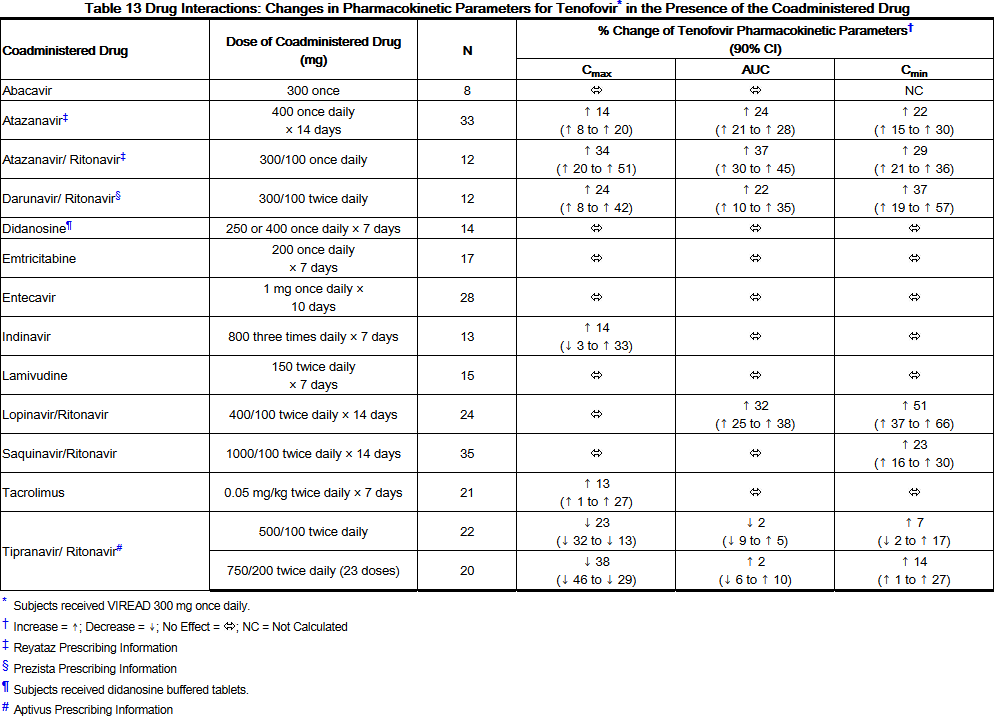
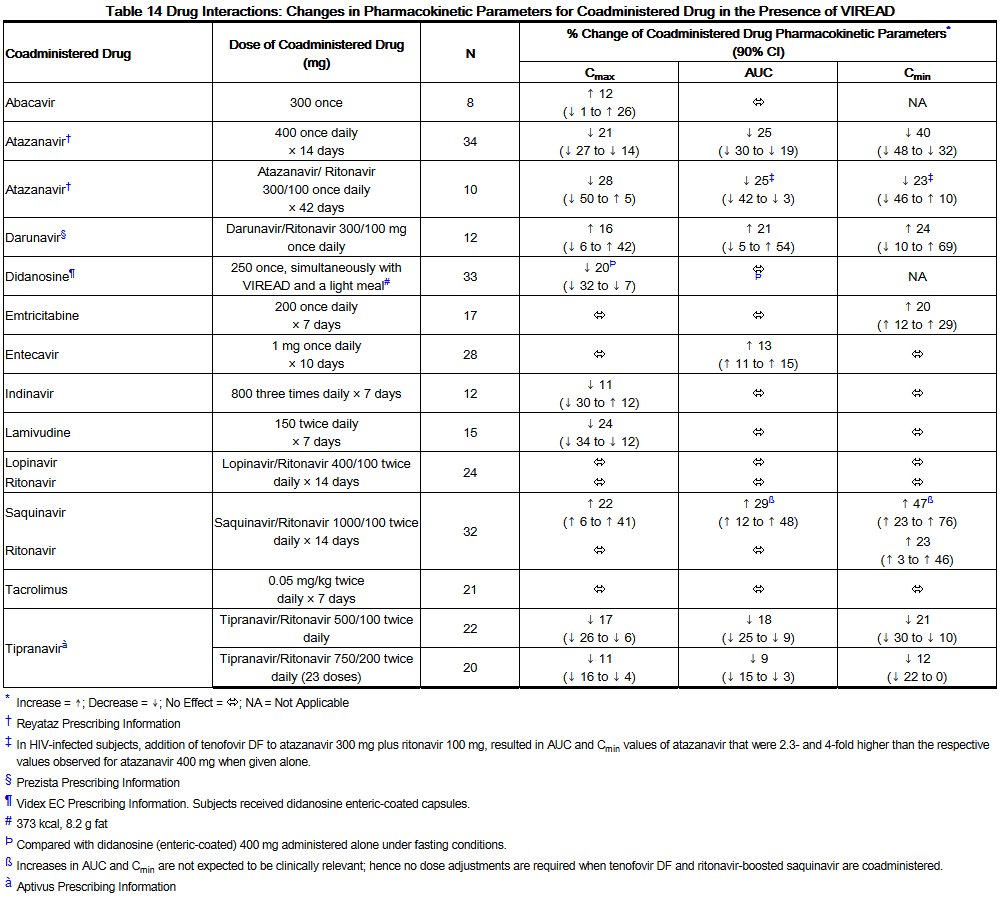
- Tenofovir has been evaluated in healthy volunteers in combination with other antiretroviral and potential concomitant drugs. Tables 13 and 14 summarize pharmacokinetic effects of coadministered drug on tenofovir pharmacokinetics and effects of Tenofovir on the pharmacokinetics of coadministered drug. Coadministration of Tenofovir with didanosine results in changes in the pharmacokinetics of didanosine that may be of clinical significance. Concomitant dosing of Tenofovir with didanosine significantly increases the Cmax and AUC of didanosine. When didanosine 250 mg enteric-coated capsules were administered with Tenofovir, systemic exposures of didanosine were similar to those seen with the 400 mg enteric-coated capsules alone under fasted conditions (Table 14). The mechanism of this interaction is unknown.
- No clinically significant drug interactions have been observed between Tenofovir and efavirenz, methadone, nelfinavir, oral contraceptives, or ribavirin.
This image is provided by the National Library of Medicine.

This image is provided by the National Library of Medicine.

Microbiology
- Mechanism of Action
- Tenofovir disoproxil fumarate is an acyclic nucleoside phosphonate diester analog of adenosine monophosphate. Tenofovir disoproxil fumarate requires initial diester hydrolysis for conversion to tenofovir and subsequent phosphorylations by cellular enzymes to form tenofovir diphosphate, an obligate chain terminator. Tenofovir diphosphate inhibits the activity of HIV-1 reverse transcriptase and HBV reverse transcriptase by competing with the natural substrate deoxyadenosine 5'-triphosphate and, after incorporation into DNA, by DNA chain termination. Tenofovir diphosphate is a weak inhibitor of mammalian DNA polymerases α, β, and mitochondrial DNA polymerase γ.
- Activity against HIV
- Antiviral Activity
- The antiviral activity of tenofovir against laboratory and clinical isolates of HIV-1 was assessed in lymphoblastoid cell lines, primary monocyte/macrophage cells and peripheral blood lymphocytes. The EC50 (50% effective concentration) values for tenofovir were in the range of 0.04 µM to 8.5 µM. In drug combination studies, tenofovir was not antagonistic with nucleoside reverse transcriptase inhibitors (abacavir, didanosine, lamivudine, stavudine, zalcitabine, zidovudine), non-nucleoside reverse transcriptase inhibitors (delavirdine, efavirenz, nevirapine), and protease inhibitors (amprenavir, indinavir, nelfinavir, ritonavir, saquinavir). Tenofovir displayed antiviral activity in cell culture against HIV-1 clades A, B, C, D, E, F, G, and O (EC50 values ranged from 0.5 µM to 2.2 µM) and strain specific activity against HIV-2 (EC50 values ranged from 1.6 µM to 5.5 µM).
- Resistance
- HIV-1 isolates with reduced susceptibility to tenofovir have been selected in cell culture. These viruses expressed a K65R substitution in reverse transcriptase and showed a 2–4 fold reduction in susceptibility to tenofovir.
- In Study 903 of treatment-naïve subjects (Tenofovir + lamivudine + efavirenz versus stavudine + lamivudine + efavirenz), genotypic analyses of isolates from subjects with virologic failure through Week 144 showed development of efavirenz and lamivudine resistance-associated substitutions to occur most frequently and with no difference between the treatment arms. The K65R substitution occurred in 8/47 (17%) analyzed patient isolates on the Tenofovir arm and in 2/49 (4%) analyzed patient isolates on the stavudine arm. Of the 8 subjects whose virus developed K65R in the Tenofovir arm through 144 weeks, 7 of these occurred in the first 48 weeks of treatment and one at Week 96. Other substitutions resulting in resistance to Tenofovir were not identified in this trial.
- In Study 934 of treatment-naïve subjects (Tenofovir + EMTRIVA + efavirenz versus zidovudine (AZT)/lamivudine (3TC) + efavirenz), genotypic analysis performed on HIV-1 isolates from all confirmed virologic failure subjects with greater than 400 copies/mL of HIV-1 RNA at Week 144 or early discontinuation showed development of efavirenz resistance-associated substitutions occurred most frequently and was similar between the two treatment arms. The M184V substitution, associated with resistance to EMTRIVA and lamivudine, was observed in 2/19 analyzed subject isolates in the Tenofovir + EMTRIVA group and in 10/29 analyzed subject isolates in the zidovudine/lamivudine group. Through 144 weeks of Study 934, no subjects have developed a detectable K65R substitution in their HIV-1 as analyzed through standard genotypic analysis.
- Cross-Resistance
- Cross-resistance among certain reverse transcriptase inhibitors has been recognized. The K65R substitution selected by tenofovir is also selected in some HIV-1 infected subjects treated with abacavir, didanosine, or zalcitabine. HIV-1 isolates with this substitution also show reduced susceptibility to emtricitabine and lamivudine. Therefore, cross-resistance among these drugs may occur in patients whose virus harbors the K65R substitution. HIV-1 isolates from subjects (N=20) whose HIV-1 expressed a mean of 3 zidovudine-associated reverse transcriptase substitutions (M41L, D67N, K70R, L210W, T215Y/F, or K219Q/E/N), showed a 3.1-fold decrease in the susceptibility to tenofovir.
- In Studies 902 and 907 conducted in treatment-experienced subjects (Tenofovir + Standard Background Therapy (SBT) compared to Placebo + SBT), 14/304 (5%) of the Tenofovir-treated subjects with virologic failure through Week 96 had greater than 1.4-fold (median 2.7-fold) reduced susceptibility to tenofovir. Genotypic analysis of the baseline and failure isolates showed the development of the K65R substitution in the HIV-1 reverse transcriptase gene.
- The virologic response to Tenofovir therapy has been evaluated with respect to baseline viral genotype (N=222) in treatment-experienced subjects participating in Studies 902 and 907. In these clinical trials, 94% of the participants evaluated had baseline HIV-1 isolates expressing at least one NRTI substitution. Virologic responses for subjects in the genotype substudy were similar to the overall trial results.
- Several exploratory analyses were conducted to evaluate the effect of specific substitutions and substitutional patterns on virologic outcome. Because of the large number of potential comparisons, statistical testing was not conducted. Varying degrees of cross-resistance of Tenofovir to pre-existing zidovudine resistance-associated substitutions (M41L, D67N, K70R, L210W, T215Y/F, or K219Q/E/N) were observed and appeared to depend on the type and number of specific substitutions. Tenofovir-treated subjects whose HIV-1 expressed 3 or more zidovudine resistance-associated substitutions that included either the M41L or L210W reverse transcriptase substitution showed reduced responses to Tenofovir therapy; however, these responses were still improved compared with placebo. The presence of the D67N, K70R, T215Y/F, or K219Q/E/N substitution did not appear to affect responses to Tenofovir therapy. Subjects whose virus expressed an L74V substitution without zidovudine resistance associated substitutions (N=8) had reduced response to Tenofovir. Limited data are available for subjects whose virus expressed a Y115F substitution (N=3), Q151M substitution (N=2), or T69 insertion (N=4), all of whom had a reduced response.
- In the protocol defined analyses, virologic response to Tenofovir was not reduced in subjects with HIV-1 that expressed the abacavir/emtricitabine/lamivudine resistance-associated M184V substitution. HIV-1 RNA responses among these subjects were durable through Week 48.
- Studies 902 and 907 Phenotypic Analyses
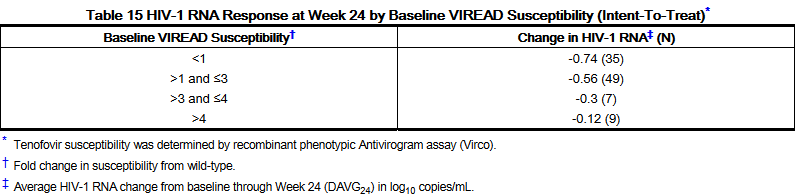
- Phenotypic analysis of baseline HIV-1 from treatment-experienced subjects (N=100) demonstrated a correlation between baseline susceptibility to Tenofovir and response to Tenofovir therapy. Table 15 summarizes the HIV-1 RNA response by baseline Tenofovir susceptibility.
This image is provided by the National Library of Medicine.

- Activity against HBV
- Antiviral Activity
- The antiviral activity of tenofovir against HBV was assessed in the HepG2 2.2.15 cell line. The EC50 values for tenofovir ranged from 0.14 to 1.5 µM, with CC50 (50% cytotoxicity concentration) values greater than 100 µM. In cell culture combination antiviral activity studies of tenofovir with the nucleoside HBV reverse transcriptase inhibitors entecavir, lamivudine, and telbivudine, and with the nucleoside HIV-1 reverse transcriptase inhibitor emtricitabine, no antagonistic activity was observed.
- Resistance
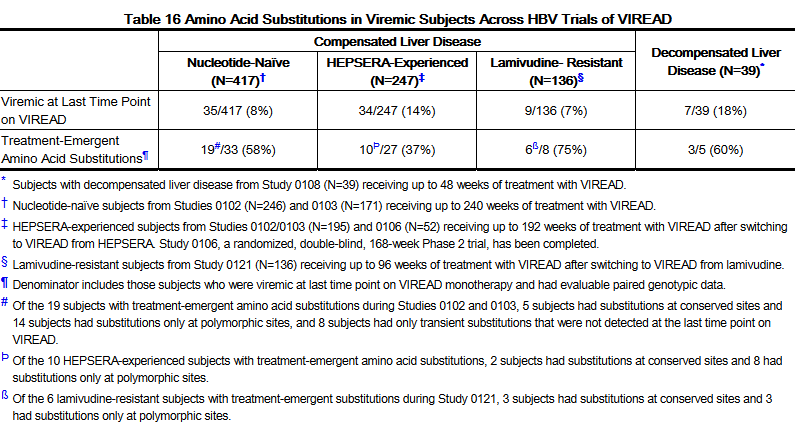
- Cumulative Tenofovir genotypic resistance has been evaluated annually for up to 240 weeks in Studies 0102, 0103, 0106, 0108, and 0121 with the paired HBV reverse transcriptase amino acid sequences of the pre-treatment and on-treatment isolates from subjects who received at least 24 weeks of Tenofovir monotherapy and remained viremic with HBV DNA greater than or equal to 400 copies/mL at the end of each study year (or at discontinuation of Tenofovir monotherapy) using an as-treated analysis. In the nucleotide-naïve population from Studies 0102 and 0103, HBeAg-positive subjects had a higher baseline viral load than HBeAg-negative subjects and a significantly higher proportion of the subjects remained viremic at their last time point on Tenofovir monotherapy (15% versus 4%, respectively).
- HBV isolates from these subjects who remained viremic showed treatment-emergent substitutions (Table 16); however, no specific substitutions occurred at a sufficient frequency to be associated with resistance to Tenofovir (genotypic and phenotypic analyses).
This image is provided by the National Library of Medicine.

- Cross-Resistance
- Cross-resistance has been observed between HBV nucleoside/nucleotide analogue reverse transcriptase inhibitors.
- In cell based assays, HBV strains expressing the rtV173L, rtL180M, and rtM204I/V substitutions associated with resistance to lamivudine and telbivudine showed a susceptibility to tenofovir ranging from 0.7- to 3.4-fold that of wild type virus. The rtL180M and rtM204I/V double substitutions conferred 3.4-fold reduced susceptibility to tenofovir.
- HBV strains expressing the rtL180M, rtT184G, rtS202G/I, rtM204V, and rtM250V substitutions associated with resistance to entecavir showed a susceptibility to tenofovir ranging from 0.6- to 6.9-fold that of wild type virus.
- HBV strains expressing the adefovir resistance-associated substitutions rtA181V and/or rtN236T showed reductions in susceptibility to tenofovir ranging from 2.9- to 10-fold that of wild type virus. Strains containing the rtA181T substitution showed changes in susceptibility to tenofovir ranging from 0.9- to 1.5-fold that of wild type virus.
- One hundred fifty-two subjects initiating Tenofovir therapy in Studies 0102, 0103, 0106, 0108, and 0121 harbored HBV with known resistance substitutions to HBV nucleos(t)ide analogue reverse transcriptase inhibitors: 14 with adefovir resistance-associated substitutions (rtA181S/T/V and/or rtN236T), 135 with lamivudine resistance-associated substitutions (rtM204I/V), and 3 with both adefovir and lamivudine resistance-associated substitutions. Following up to 240 weeks of Tenofovir treatment, 11 of the 14 subjects with adefovir-resistant HBV, 124 of the 135 subjects with lamivudine-resistant HBV, and 2 of the 3 subjects with both adefovir- and lamivudine-resistant HBV achieved and maintained virologic suppression (HBV DNA less than 400 copies/mL). Three of the 5 subjects whose virus harbored both the rtA181T/V and rtN236T substitutions remained viremic.
Nonclinical Toxicology
Carcinogenesis, Mutagenesis, Impairment of Fertility
Carcinogenesis
- Long-term oral carcinogenicity studies of tenofovir disoproxil fumarate in mice and rats were carried out at exposures up to approximately 16 times (mice) and 5 times (rats) those observed in humans at the therapeutic dose for HIV-1 infection. At the high dose in female mice, liver adenomas were increased at exposures 16 times that in humans. In rats, the study was negative for carcinogenic findings at exposures up to 5 times that observed in humans at the therapeutic dose.
Mutagenesis
- Tenofovir disoproxil fumarate was mutagenic in the in vitro mouse lymphoma assay and negative in an in vitro bacterial mutagenicity test (Ames test). In an in vivo mouse micronucleus assay, tenofovir disoproxil fumarate was negative when administered to male mice.
Impairment of Fertility
- There were no effects on fertility, mating performance or early embryonic development when tenofovir disoproxil fumarate was administered to male rats at a dose equivalent to 10 times the human dose based on body surface area comparisons for 28 days prior to mating and to female rats for 15 days prior to mating through day seven of gestation. There was, however, an alteration of the estrous cycle in female rats.
Animal Toxicology and/or Pharmacology
- Tenofovir and tenofovir disoproxil fumarate administered in toxicology studies to rats, dogs, and monkeys at exposures (based on AUCs) greater than or equal to 6 fold those observed in humans caused bone toxicity. In monkeys the bone toxicity was diagnosed as osteomalacia. Osteomalacia observed in monkeys appeared to be reversible upon dose reduction or discontinuation of tenofovir. In rats and dogs, the bone toxicity manifested as reduced bone mineral density. The mechanism(s) underlying bone toxicity is unknown.
- Evidence of renal toxicity was noted in 4 animal species. Increases in serum creatinine, BUN, glycosuria, proteinuria, phosphaturia, and/or calciuria and decreases in serum phosphate were observed to varying degrees in these animals. These toxicities were noted at exposures (based on AUCs) 2–20 times higher than those observed in humans. The relationship of the renal abnormalities, particularly the phosphaturia, to the bone toxicity is not known.
Clinical Studies
Clinical Efficacy in Adults with HIV-1 Infection
- Treatment-Naïve Adult Patients
- Study 903
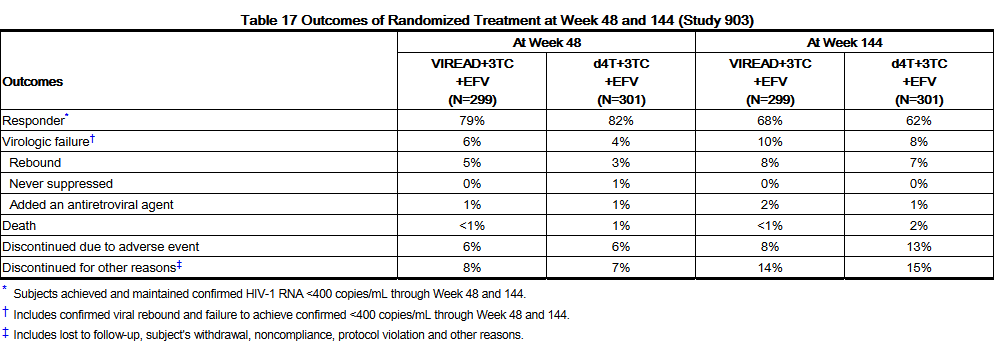
- Data through 144 weeks are reported for Study 903, a double-blind, active-controlled multicenter trial comparing Tenofovir (300 mg once daily) administered in combination with lamivudine and efavirenz versus stavudine (d4T), lamivudine, and efavirenz in 600 antiretroviral-naïve subjects. Subjects had a mean age of 36 years (range 18–64), 74% were male, 64% were Caucasian and 20% were Black. The mean baseline CD4+ cell count was 279 cells/mm3 (range 3–956) and median baseline plasma HIV-1 RNA was 77,600 copies/mL (range 417–5,130,000). Subjects were stratified by baseline HIV-1 RNA and CD4+ cell count. Forty-three percent of subjects had baseline viral loads >100,000 copies/mL and 39% had CD4+ cell counts <200 cells/mm3. Treatment outcomes through 48 and 144 weeks are presented in Table 17.
This image is provided by the National Library of Medicine.

- Achievement of plasma HIV-1 RNA concentrations of less than 400 copies/mL at Week 144 was similar between the two treatment groups for the population stratified at baseline on the basis of HIV-1 RNA concentration (> or ≤100,000 copies/mL) and CD4+ cell count (< or ≥200 cells/mm3). Through 144 weeks of therapy, 62% and 58% of subjects in the Tenofovir and stavudine arms, respectively achieved and maintained confirmed HIV-1 RNA <50 copies/mL. The mean increase from baseline in CD4+ cell count was 263 cells/mm3 for the Tenofovir arm and 283 cells/mm3 for the stavudine arm.
- Through 144 weeks, 11 subjects in the Tenofovir group and 9 subjects in the stavudine group experienced a new CDC Class C event.
- Study 934
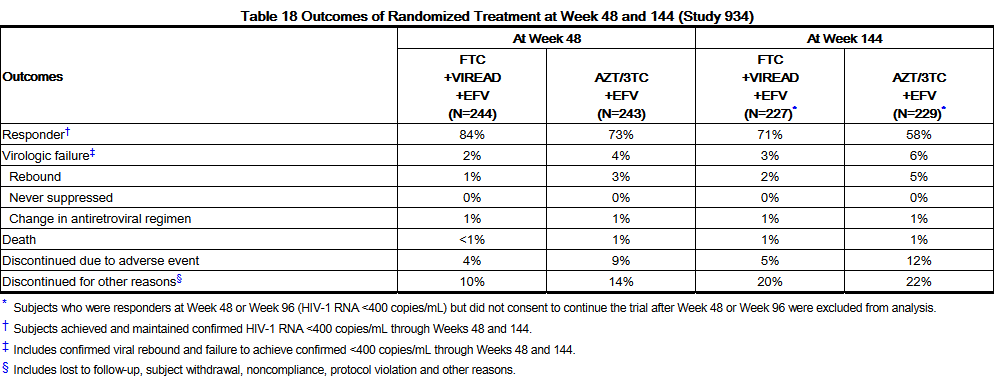
- Data through 144 weeks are reported for Study 934, a randomized, open-label, active-controlled multicenter trial comparing emtricitabine + Tenofovir administered in combination with efavirenz versus zidovudine/lamivudine fixed-dose combination administered in combination with efavirenz in 511 antiretroviral-naïve subjects. From Weeks 96 to 144 of the trial, subjects received a fixed-dose combination of emtricitabine and tenofovir DF with efavirenz in place of emtricitabine + Tenofovir with efavirenz. Subjects had a mean age of 38 years (range 18–80), 86% were male, 59% were Caucasian and 23% were Black. The mean baseline CD4+ cell count was 245 cells/mm3 (range 2–1191) and median baseline plasma HIV-1 RNA was 5.01 log10 copies/mL (range 3.56–6.54). Subjects were stratified by baseline CD4+ cell count (< or ≥200 cells/mm3); 41% had CD4+ cell counts <200 cells/mm3 and 51% of subjects had baseline viral loads >100,000 copies/mL. Treatment outcomes through 48 and 144 weeks for those subjects who did not have efavirenz resistance at baseline are presented in Table 18.
This image is provided by the National Library of Medicine.

- Through Week 48, 84% and 73% of subjects in the emtricitabine + Tenofovir group and the zidovudine/lamivudine group, respectively, achieved and maintained HIV-1 RNA <400 copies/mL (71% and 58% through Week 144). The difference in the proportion of subjects who achieved and maintained HIV-1 RNA <400 copies/mL through 48 weeks largely results from the higher number of discontinuations due to adverse events and other reasons in the zidovudine/lamivudine group in this open-label trial. In addition, 80% and 70% of subjects in the emtricitabine + Tenofovir group and the zidovudine/lamivudine group, respectively, achieved and maintained HIV-1 RNA <50 copies/mL through Week 48 (64% and 56% through Week 144). The mean increase from baseline in CD4+ cell count was 190 cells/mm3 in the EMTRIVA + Tenofovir group and 158 cells/mm3 in the zidovudine/lamivudine group at Week 48 (312 and 271 cells/mm3 at Week 144).
- Through 48 weeks, 7 subjects in the emtricitabine + Tenofovir group and 5 subjects in the zidovudine/lamivudine group experienced a new CDC Class C event (10 and 6 subjects through 144 weeks).
- Treatment-Experienced Adult Patients
- Study 907
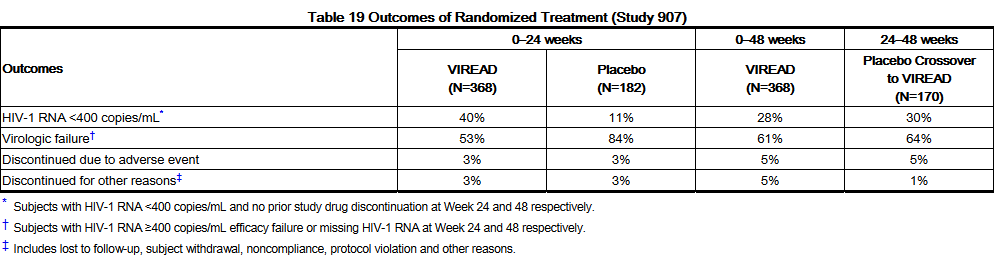
- Study 907 was a 24-week, double-blind placebo-controlled multicenter trial of Tenofovir added to a stable background regimen of antiretroviral agents in 550 treatment-experienced subjects. After 24 weeks of blinded trial treatment, all subjects continuing on trial were offered open-label Tenofovir for an additional 24 weeks. Subjects had a mean baseline CD4+ cell count of 427 cells/mm3 (range 23–1385), median baseline plasma HIV-1 RNA of 2340 (range 50–75,000) copies/mL, and mean duration of prior HIV-1 treatment was 5.4 years. Mean age of the subjects was 42 years, 85% were male and 69% were Caucasian, 17% Black and 12% Hispanic.
- The percent of subjects with HIV-1 RNA <400 copies/mL and outcomes of subjects through 48 weeks are summarized in Table 19.
This image is provided by the National Library of Medicine.

- At 24 weeks of therapy, there was a higher proportion of subjects in the Tenofovir arm compared to the placebo arm with HIV-1 RNA <50 copies/mL (19% and 1%, respectively). Mean change in absolute CD4+ cell counts by Week 24 was +11 cells/mm3 for the Tenofovir group and -5 cells/mm3 for the placebo group. Mean change in absolute CD4+ cell counts by Week 48 was +4 cells/mm3 for the Tenofovir group.
- Through Week 24, one subject in the Tenofovir group and no subjects in the placebo arm experienced a new CDC Class C event.
Clinical Efficacy in Adults with Chronic Hepatitis B
- HBeAg-Negative Chronic Hepatitis B
- Study 0102 was a Phase 3, randomized, double-blind, active-controlled trial of Tenofovir 300 mg compared to HEPSERA 10 mg in 375 HBeAg- (anti-HBe+) subjects with compensated liver function, the majority of whom were nucleoside-naïve. The mean age of subjects was 44 years, 77% were male, 25% were Asian, 65% were Caucasian, 17% had previously received alpha-interferon therapy and 18% were nucleoside-experienced (16% had prior lamivudine experience). At baseline, subjects had a mean Knodell necroinflammatory score of 7.8; mean plasma HBV DNA was 6.9 log10 copies/mL; and mean serum ALT was 140 U/L.
- HBeAg-Positive Chronic Hepatitis B
- Study 0103 was a Phase 3, randomized, double-blind, active-controlled trial of Tenofovir 300 mg compared to HEPSERA 10 mg in 266 HBeAg+ nucleoside-naïve subjects with compensated liver function. The mean age of subjects was 34 years, 69% were male, 36% were Asian, 52% were Caucasian, 16% had previously received alpha-interferon therapy, and <5% were nucleoside experienced. At baseline, subjects had a mean Knodell necroinflammatory score of 8.4; mean plasma HBV DNA was 8.7 log10 copies /mL; and mean serum ALT was 147 U/L.
- The primary data analysis was conducted after all subjects reached 48 weeks of treatment and results are summarized below.
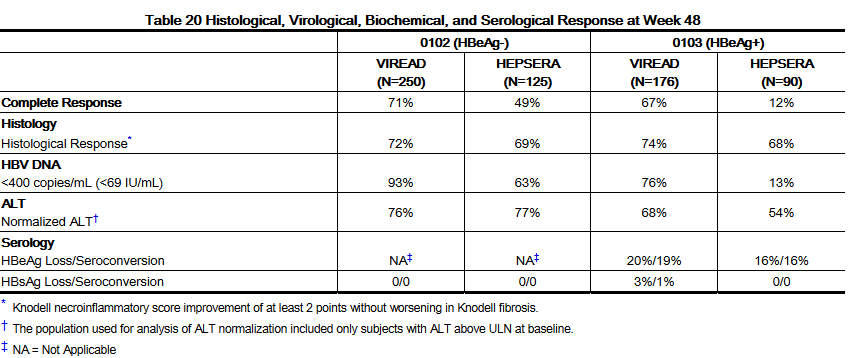
- The primary efficacy endpoint in both trials was complete response to treatment defined as HBV DNA <400 copies/mL and Knodell necroinflammatory score improvement of at least 2 points, without worsening in Knodell fibrosis at Week 48 (Table 20).
This image is provided by the National Library of Medicine.

- Treatment Beyond 48 Weeks
- In Studies 0102 (HBeAg-negative) and 0103 (HBeAg-positive), subjects who completed double-blind treatment (389 and 196 subjects who were originally randomized to Tenofovir and HEPSERA, respectively) were eligible to roll over to open-label Tenofovir with no interruption in treatment.
- In Study 0102, 304 of 375 subjects (81%) continued in the study through Week 240. Among subjects randomized to Tenofovir followed by open-label treatment with Tenofovir, 82% had HBV DNA < 400 copies/mL, and 69% had ALT normalization at Week 240. Among subjects randomized to HEPSERA followed by open-label treatment with Tenofovir, 88% had HBV DNA < 400 copies/mL and 76% had ALT normalization through Week 240. No subject in either treatment group experienced HBsAg loss/seroconversion through Week 240.
- In Study 0103, 185 of 266 subjects (69%) continued in the study through Week 240. Among subjects randomized to Tenofovir, 63% had HBV DNA < 400 copies/mL, 44% had ALT normalization, and 34% had HBeAg loss (26% seroconversion to anti-HBe antibody) through Week 240. Among subjects randomized to HEPSERA followed by up to 192 weeks of open-label treatment with Tenofovir, 64% had HBV DNA < 400 copies/mL, 54% had ALT normalization, and 34% had HBeAg loss (29% seroconversion to anti-HBe antibody) through Week 240. At Week 240, HBsAg loss was 9% in both treatment groups, and seroconversion to anti-HBs was 7% for the subjects initially randomized to Tenofovir and 9% for subjects initially randomized to HEPSERA.
- Of the originally randomized and treated 641 subjects in the two studies, liver biopsy data from 328 subjects who received continuing open-label treatment with Tenofovir monotherapy were available for analysis at baseline, Week 48 and Week 240. There were no apparent differences between the subset of subjects who had liver biopsy data at Week 240 and those subjects remaining on open-label Tenofovir without biopsy data that would be expected to affect histological outcomes at Week 240. Among the 328 subjects evaluated, the observed histological response rates were 80% and 88% at Week 48 and Week 240, respectively. In the subjects without cirrhosis at baseline (Ishak fibrosis score 0-4), 92% (216/235) and 95% (223/235) had either improvement or no change in Ishak fibrosis score at Week 48 and Week 240, respectively. In subjects with cirrhosis at baseline (Ishak fibrosis score 5-6), 97% (90/93) and 99% (92/93) had either improvement or no change in Ishak fibrosis score at Week 48 and Week 240, respectively. Twenty-nine percent (27/93) and 72% (67/93) of subjects with cirrhosis at baseline experienced regression of cirrhosis by Week 48 and Week 240, respectively, with a reduction in Ishak fibrosis score of at least 2 points. No definitive conclusions can be established about the remaining study population who were not part of this subset analysis.
- Patients with Lamivudine-Resistant Chronic Hepatitis B
- Study 121 was a randomized, double-blind, active-controlled trial evaluating the safety and efficacy of Tenofovir compared to an unapproved antiviral regimen in subjects with chronic hepatitis B, persistent viremia (HBV DNA ≥ 1,000 IU/mL), and genotypic evidence of lamivudine resistance (rtM204I/V +/- rtL180M). One hundred forty-one adult subjects were randomized to the Tenofovir treatment arm. The mean age of subjects randomized to Tenofovir was 47 years (range 18–73), 74% were male, 59% were Caucasian, and 37% were Asian. At baseline, 54% of subjects were HBeAg-negative, 46% were HBeAg-positive, and 56% had abnormal ALT. Subjects had a mean HBV DNA of 6.4 log10 copies/mL and mean serum ALT of 71 U/L at baseline.
- After 96 weeks of treatment, 126 of 141 subjects (89%) randomized to Tenofovir had HBV DNA < 400 copies/mL, and 49 of 79 subjects (62%) with abnormal ALT at baseline had ALT normalization. Among the HBeAg-positive subjects randomized to Tenofovir, 10 of 65 subjects (15%) experienced HBeAg loss, and 7 of 65 subjects (11%) experienced anti-HBe seroconversion through Week 96. The proportion of subjects with HBV DNA concentrations below 400 copies/mL at Week 96 was similar between the Tenofovir monotherapy and the comparator arms.
- Across the combined chronic hepatitis B treatment trials, the number of subjects with adefovir-resistance associated substitutions at baseline was too small to establish efficacy in this subgroup.
- Patients with Chronic Hepatitis B and Decompensated Liver Disease
- Tenofovir was studied in a small randomized, double-blind, active-controlled trial evaluating the safety of Tenofovir compared to other antiviral drugs in subjects with chronic hepatitis B and decompensated liver disease through 48 weeks (Study 0108).
- Forty-five adult subjects (37 males and 8 females) were randomized to the Tenofovir treatment arm. At baseline, 69% subjects were HBeAg-negative, and 31% were HBeAg-positive. Subjects had a mean Child-Pugh score of 7, a mean MELD score of 12, mean HBV DNA of 5.8 log10 copies/mL and mean serum ALT of 61 U/L at baseline. Trial endpoints were discontinuation due to an adverse event and confirmed increase in serum creatinine ≥ 0.5 mg/dL or confirmed serum phosphorus of < 2 mg/dL.
- At 48 weeks, 31/44 (70%) and 12/26 (46%) Tenofovir-treated subjects achieved an HBV DNA < 400 copies/mL, and normalized ALT, respectively. The trial was not designed to evaluate treatment impact on clinical endpoints such as progression of liver disease, need for liver transplantation, or death.
How Supplied
- Tablets
- Tenofovir tablets, 150 mg, are triangle-shaped, white, film-coated tablets containing 150 mg of tenofovir disoproxil fumarate, which is equivalent to 123 mg of tenofovir disoproxil, are debossed with "GSI" on one side and with "150" on the other side. Each bottle contains 30 tablets, a desiccant (silica gel canister or sachet), and closed with a child-resistant closure. (NDC 61958-0404-1)
- Tenofovir tablets, 200 mg, are round-shaped, white, film-coated tablets containing 200 mg of tenofovir disoproxil fumarate, which is equivalent to 163 mg of tenofovir disoproxil, are debossed with "GSI" on one side and with "200" on the other side. Each bottle contains 30 tablets, a desiccant (silica gel canister or sachet), and closed with a child-resistant closure. (NDC 61958-0405-1)
- Tenofovir tablets, 250 mg, are capsule-shaped, white, film-coated tablets containing 250 mg of tenofovir disoproxil fumarate, which is equivalent to 204 mg of tenofovir disoproxil, are debossed with "GSI" on one side and with "250" on the other side. Each bottle contains 30 tablets, a desiccant (silica gel canister or sachet), and closed with a child-resistant closure. (NDC 61958-0406-1)
- Tenofovir tablets, 300 mg, are almond-shaped, light blue, film-coated tablets containing 300 mg of tenofovir disoproxil fumarate, which is equivalent to 245 mg of tenofovir disoproxil, are debossed with "GILEAD" and "4331" on one side and with "300" on the other side. Each bottle contains 30 tablets, a desiccant (silica gel canister or sachet), and closed with a child-resistant closure. (NDC 61958-0401-1)
- Oral Powder
- Tenofovir oral powder consists of white, coated granules containing 40 mg of tenofovir disoproxil fumarate, which is equivalent to 33 mg of tenofovir disoproxil, per gram of powder and is available in multi-use bottles containing 60 grams of oral powder, closed with a child-resistant closure, and co-packaged with a dosing scoop. (NDC 61958-0403-1)
- Store Tenofovir tablets and oral powder at 25 °C (77 °F), excursions permitted to 15–30 °C (59–86 °F).
- Keep the bottle tightly closed. Dispense only in original container. Do not use if seal over bottle opening is broken or missing.
Storage
There is limited information regarding Tenofovir Storage in the drug label.
Images
Drug Images
{{#ask: Page Name::Tenofovir |?Pill Name |?Drug Name |?Pill Ingred |?Pill Imprint |?Pill Dosage |?Pill Color |?Pill Shape |?Pill Size (mm) |?Pill Scoring |?NDC |?Drug Author |format=template |template=DrugPageImages |mainlabel=- |sort=Pill Name }}
Package and Label Display Panel
{{#ask: Label Page::Tenofovir |?Label Name |format=template |template=DrugLabelImages |mainlabel=- |sort=Label Page }}
Patient Counseling Information
Information for Patients
- Patients should be advised that:
- Tenofovir is not a cure for HIV-1 infection and patients may continue to experience illnesses associated with HIV-1 infection, including opportunistic infections. Patients should remain under the care of a physician when using Tenofovir.
- Patients should avoid doing things that can spread HIV or HBV to others.
- Do not share needles or other injection equipment.
- Do not share personal items that can have blood or body fluids on them, like toothbrushes and razor blades.
- Do not have any kind of sex without protection. Always practice safer sex by using a latex or polyurethane condom to lower the chance of sexual contact with semen, vaginal secretions, or blood.
- Do not breastfeed. Tenofovir is excreted in breast milk and it is not known whether it can harm the baby. Mothers with HIV-1 should not breastfeed because HIV-1 can be passed to the baby in the breast milk.
- The long term effects of Tenofovir are unknown.
- Tenofovir tablets and oral powder are for oral ingestion only.
- Tenofovir should not be discontinued without first informing their physician.
- If you have HIV-1 infection, with or without HBV coinfection, it is important to take Tenofovir with combination therapy.
- It is important to take Tenofovir on a regular dosing schedule and to avoid missing doses.
- Lactic acidosis and severe hepatomegaly with steatosis, including fatal cases, have been reported. Treatment with Tenofovir should be suspended in any patient who develops clinical symptoms suggestive of lactic acidosis or pronounced hepatotoxicity (including nausea, vomiting, unusual or unexpected stomach discomfort, and weakness).
- Severe acute exacerbations of hepatitis have been reported in patients who are infected with HBV or coinfected with HBV and HIV-1 and have discontinued Tenofovir.
- Renal impairment, including cases of acute renal failure and Fanconi syndrome, has been reported. Tenofovir should be avoided with concurrent or recent use of a nephrotoxic agent (e.g., high-dose or multiple NSAIDs). Dosing interval of Tenofovir may need adjustment in patients with renal impairment.
- Tenofovir should not be coadministered with the fixed-dose combination products ATRIPLA, COMPLERA, STRIBILD, and TRUVADA since it is a component of these products.
- Tenofovir should not be administered in combination with HEPSERA .
- Patients with HIV-1 should be tested for Hepatitis B virus (HBV) before initiating antiretroviral therapy.
- In patients with chronic hepatitis B, it is important to obtain HIV antibody testing prior to initiating Tenofovir.
- Decreases in bone mineral density have been observed with the use of Tenofovir. Bone mineral density monitoring should be considered in patients who have a history of pathologic bone fracture or at risk for osteopenia.
- In the treatment of chronic hepatitis B, the optimal duration of treatment is unknown. The relationship between response and long-term prevention of outcomes such as hepatocellular carcinoma is not known.

This image is provided by the National Library of Medicine.

Precautions with Alcohol
- Alcohol-Tenofovir interaction has not been established. Talk to your doctor about the effects of taking alcohol with this medication.
Brand Names
- VIREAD®[2]
Look-Alike Drug Names
There is limited information regarding Tenofovir Look-Alike Drug Names in the drug label.
Price
References
The contents of this FDA label are provided by the National Library of Medicine.
- ↑ Lacombe K, Gozlan J, Boyd A, Boelle PY, Bonnard P, Molina JM; et al. (2008). "Comparison of the antiviral activity of adefovir and tenofovir on hepatitis B virus in HIV-HBV-coinfected patients". Antivir Ther. 13 (5): 705–13. PMC 2665195. PMID 18771054.
- ↑ "VIREAD (tenofovir disoproxil fumarate) tablet, coated Tenofovir (tenofovir disoproxil fumarate) powder [Gilead Sciences, Inc.]".
{{#subobject:
 |Page Name=Tenofovir
 |Pill Name=No image.jpg
 |Drug Name=
 |Pill Ingred=|+sep=;
 |Pill Imprint=
 |Pill Dosage={{{dosageValue}}} {{{dosageUnit}}}
 |Pill Color=|+sep=;
 |Pill Shape=
 |Pill Size (mm)=
 |Pill Scoring=
 |Pill Image=
 |Drug Author=
 |NDC=
}}
{{#subobject:
 |Label Page=Tenofovir
 |Label Name=Tenofovir21.png
}}
{{#subobject:
 |Label Page=Tenofovir
 |Label Name=Tenofovir22.png
}}
{{#subobject:
 |Label Page=Tenofovir
 |Label Name=Tenofovir23.png
}}
{{#subobject:
 |Label Page=Tenofovir
 |Label Name=Tenofovir24.png
}}
{{#subobject:
 |Label Page=Tenofovir
 |Label Name=Tenofovir25.png
}}
{{#subobject:
 |Label Page=Tenofovir
 |Label Name=Tenofovir26.png
}}