Visceroptosis
You don't need to be Editor-In-Chief to add or edit content to WikiDoc. You can begin to add to or edit text on this WikiDoc page by clicking on the edit button at the top of this page. Next enter or edit the information that you would like to appear here. Once you are done editing, scroll down and click the Save page button at the bottom of the page.
Editor-In-Chief: C. Michael Gibson, M.S., M.D. [1] Phone:617-632-7753
Please Take Over This Page and Apply to be Editor-In-Chief for this topic: There can be one or more than one Editor-In-Chief. You may also apply to be an Associate Editor-In-Chief of one of the subtopics below. Please mail us [2] to indicate your interest in serving either as an Editor-In-Chief of the entire topic or as an Associate Editor-In-Chief for a subtopic. Please be sure to attach your CV and or biographical sketch.
Overview
| Visceroptosis Classification and external resources | |
| ICD-10 | K63.4 |
|---|---|
| ICD-9 | 569.89 |
|
WikiDoc Resources for Visceroptosis | |
|
Articles | |
|---|---|
|
Most recent articles on Visceroptosis Most cited articles on Visceroptosis | |
|
Media | |
|
Powerpoint slides on Visceroptosis | |
|
Evidence Based Medicine | |
|
Clinical Trials | |
|
Ongoing Trials on Visceroptosis at Clinical Trials.gov Trial results on Visceroptosis Clinical Trials on Visceroptosis at Google
| |
|
Guidelines / Policies / Govt | |
|
US National Guidelines Clearinghouse on Visceroptosis NICE Guidance on Visceroptosis
| |
|
Books | |
|
News | |
|
Commentary | |
|
Definitions | |
|
Patient Resources / Community | |
|
Patient resources on Visceroptosis Discussion groups on Visceroptosis Patient Handouts on Visceroptosis Directions to Hospitals Treating Visceroptosis Risk calculators and risk factors for Visceroptosis
| |
|
Healthcare Provider Resources | |
|
Causes & Risk Factors for Visceroptosis | |
|
Continuing Medical Education (CME) | |
|
International | |
|
| |
|
Business | |
|
Experimental / Informatics | |
Visceroptosis (or enteroptosis) is a prolapse or a sinking of the abdominal viscera below their natural position. Any or all of the organs may be displaced downward.
When the intestines are involved, the condition is known as enteroptosis; when the stomach is found below its normal position, the term gastroptosis is used.
The disease exists in all degrees of severity and may give rise to no symptoms whatsoever.
Generally, however, there is loss of appetite, nervous dyspepsia, constipation, or diarrhea, abdominal distention, headache, vertigo, emaciation, and loss of sleep. Any or all of these symptoms may be present. The condition is brought about by loss of muscular tone, particularly of the abdominal muscles, intestinal autointoxication, with relaxation of the ligaments which hold the viscera in place.
In women, tight lacing has been held to be a frequent cause. The symptoms may be alleviated by supporting the organs with a properly applied bandage, or other similar device. Rest in bed, attention to diet, hygiene, exercise, and general muscular up building will cure the majority of cases. In others operation may become necessary.
Visceroptosis is also called splanchnoptosis, abdominal ptosis, and Glénard's disease, after a French physician Frantz Glénard (1848-1920).
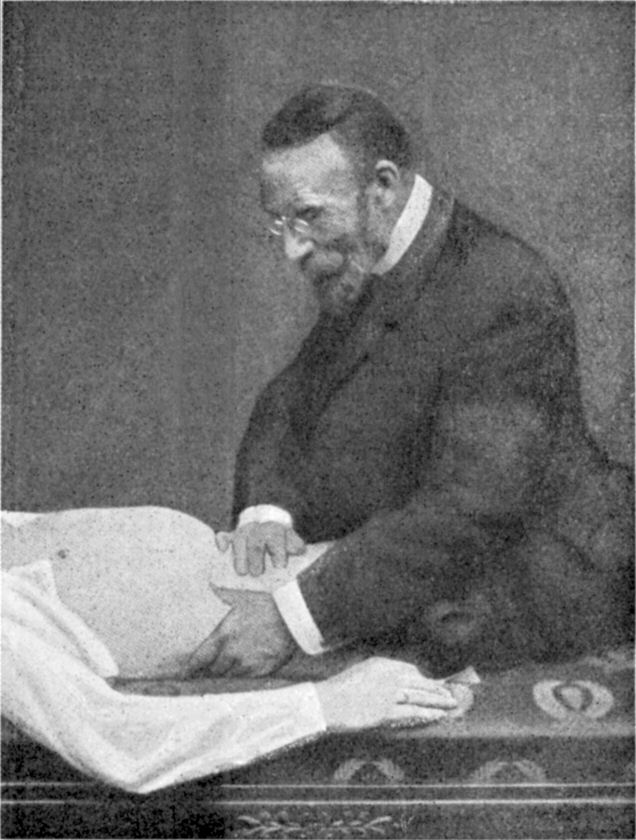
- Glénard's test — The examiner, standing behind the patient, places his arms around the patient, so that his hands meet in front of the patient's abdomen; he squeezes and raises the viscera and then allows them to fall suddenly. If the patient feels relieved by the raising pressure and experiences distress on the release, the condition is probably one of splanchoptosis.[1] Also called girdle test.
- Glénard's theory — The theory that abdominal ptosis is a nutritional disease with atrophy and prolapse of the intestine.
- Stiller's theory — The theory that gastroptosis is due to universal asthenia characterized by weakness and laxity of the viscera.
External links
References
- This article incorporates text from an edition of the New International Encyclopedia that is in the public domain.
Symptoms and signs (R00-R69, 780-789) |
|
|---|---|
| Circulatory and respiratory systems |
Tachycardia - Bradycardia - Palpitation - Heart murmur - Nosebleed - Hemoptysis - Cough - abnormalities of breathing (Dyspnea, Orthopnoea, Stridor, Wheeze, Cheyne-Stokes respiration, Hyperventilation, Mouth breathing, Hiccup, Bradypnea, Hypoventilation) - Chest pain - Asphyxia - Pleurisy - Respiratory arrest - Sputum - Bruit |
| Digestive system and abdomen | Abdominal pain - Acute abdomen - Nausea - Vomiting - Heartburn - Dysphagia - Flatulence - Burping - Fecal incontinence - Encopresis - Hepatomegaly - Splenomegaly - Hepatosplenomegaly - Jaundice - Ascites - Fecal occult blood - Halitosis |
| Skin and subcutaneous tissue | disturbances of skin sensation (Hypoesthesia, Paresthesia, Hyperesthesia) - Rash - Cyanosis - Pallor - Flushing - Petechia - Desquamation - Induration |
| Nervous and musculoskeletal systems |
abnormal involuntary movements (Tremor, Spasm, Fasciculation, Athetosis) - Gait abnormality - lack of coordination (Ataxia, Dysmetria, Dysdiadochokinesia, Hypotonia) - Tetany - Meningism - Hyperreflexia |
| Urinary system | Dysuria - Vesical tenesmus - Urinary incontinence - Urinary retention - Oliguria - Polyuria - Nocturia |
| Cognition, perception, emotional state and behaviour |
Anxiety - Somnolence - Coma - Amnesia (Anterograde amnesia, Retrograde amnesia) - Dizziness/Vertigo - smell and taste (Anosmia, Ageusia, Parosmia, Parageusia) |
| Speech and voice | speech disturbances (Dysphasia, Aphasia, Dysarthria) - symbolic dysfunctions (Dyslexia, Alexia, Agnosia, Apraxia, Acalculia, Agraphia) - voice disturbances (Dysphonia, Aphonia) |
| General symptoms and signs | Fever (Hyperpyrexia) - Headache - Chronic pain - Malaise - Fatigue - Fainting (Vasovagal syncope) - Febrile seizure - Shock (Cardiogenic shock) - Lymphadenopathy - Edema (Peripheral edema, Anasarca) - Hyperhidrosis (Sleep hyperhidrosis) - Delayed milestone - Failure to thrive - food and fluid intake (Anorexia, Polydipsia, Polyphagia) - Cachexia - Xerostomia - Clubbing |
| ||||
Acknowledgement and Attribution Regarding Sources of Content
Some of the initial content on this page may be incorporated in part from copyleft sources in the public domain including wikis such as Wikipedia and AskDrWiki. Drug information for patients came from the The National Library of Medicine. Infectious disease information may have come from the Centers for Disease Control (CDC). Differential Diagnoses are drawn from clinicians as well as an amalgamation of 3 sources: 1.The Disease Database; 2. Kahan, Scott, Smith, Ellen G. In A Page: Signs and Symptoms. Malden, Massachusetts: Blackwell Publishing, 2004:3; 3. Sailer, Christian, Wasner, Susanne. Differential Diagnosis Pocket. Hermosa Beach, CA: Borm Bruckmeir Publishing LLC, 2002:7 .