Superior gluteal artery

You don't need to be Editor-In-Chief to add or edit content to WikiDoc. You can begin to add to or edit text on this WikiDoc page by clicking on the edit button at the top of this page. Next enter or edit the information that you would like to appear here. Once you are done editing, scroll down and click the Save page button at the bottom of the page.

Jump to: navigation, search
Artery: Superior gluteal artery
Left gluteal region, showing surface markings for arteries and sciatic nerve.
Latin arteria glutea superior
Gray's subject #155 622
Supplies Gluteus maximus muscle, Piriformis muscle, Tensor fasciae latae
Source Internal iliac artery   
Vein Superior gluteal veins
Dorlands
/ Elsevier
    
a_61/12154426
Cardiology Network

Discuss Superior gluteal artery further in the WikiDoc Cardiology Network
Adult Congenital
Biomarkers
Cardiac Rehabilitation
Congestive Heart Failure
CT Angiography
Echocardiography
Electrophysiology
Cardiology General
Genetics
Health Economics
Hypertension
Interventional Cardiology
MRI
Nuclear Cardiology
Peripheral Arterial Disease
Prevention
Public Policy
Pulmonary Embolism
Stable Angina
Valvular Heart Disease
Vascular Medicine

Editor-In-Chief: C. Michael Gibson, M.S., M.D. [1] Phone:617-632-7753

Please Take Over This Page and Apply to be Editor-In-Chief for this topic: There can be one or more than one Editor-In-Chief. You may also apply to be an Associate Editor-In-Chief of one of the subtopics below. Please mail us [2] to indicate your interest in serving either as an Editor-In-Chief of the entire topic or as an Associate Editor-In-Chief for a subtopic. Please be sure to attach your CV and or biographical sketch.


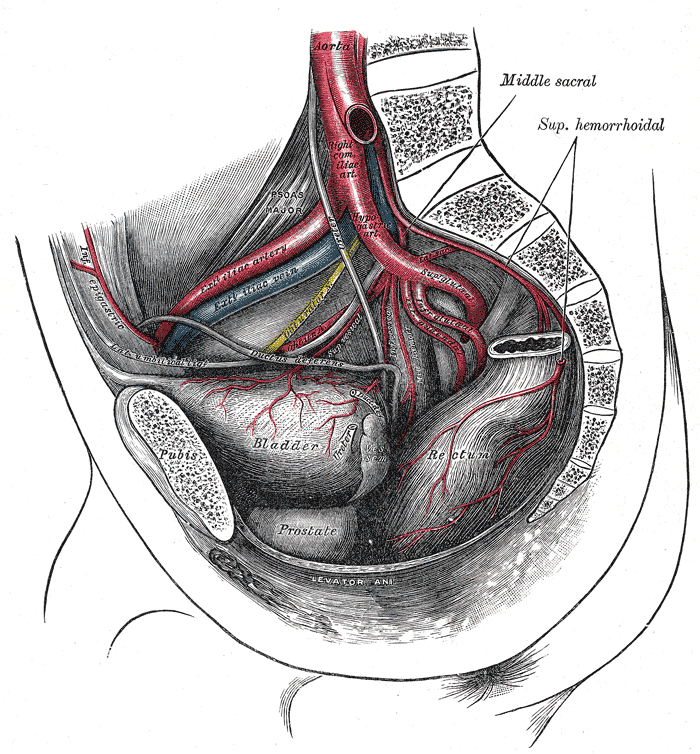
The superior gluteal artery (gluteal artery) is the largest branch of the internal iliac artery, and appears to be the continuation of the posterior division of that vessel.

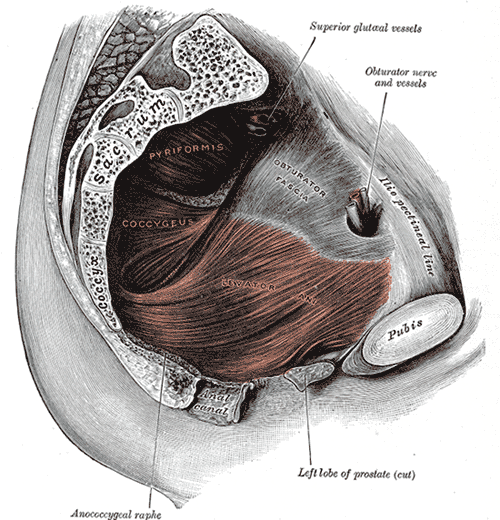
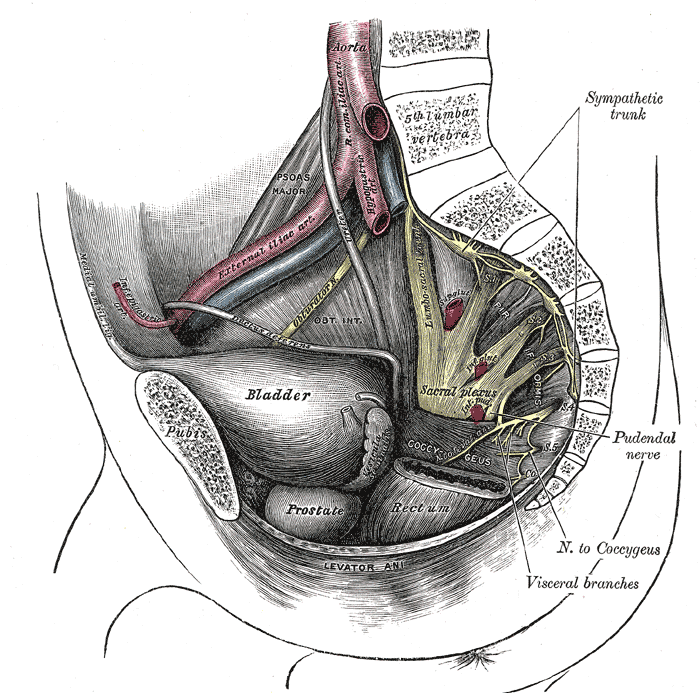
It is a short artery which runs backward between the lumbosacral trunk and the first sacral nerve, and, passing out of the pelvis above the upper border of the Piriformis, immediately divides into a superficial and a deep branch.

Within the pelvis it gives off a few branches to the Iliacus, Piriformis, and Obturator internus, and just previous to quitting that cavity, a nutrient artery which enters the ilium.

Superficial branch

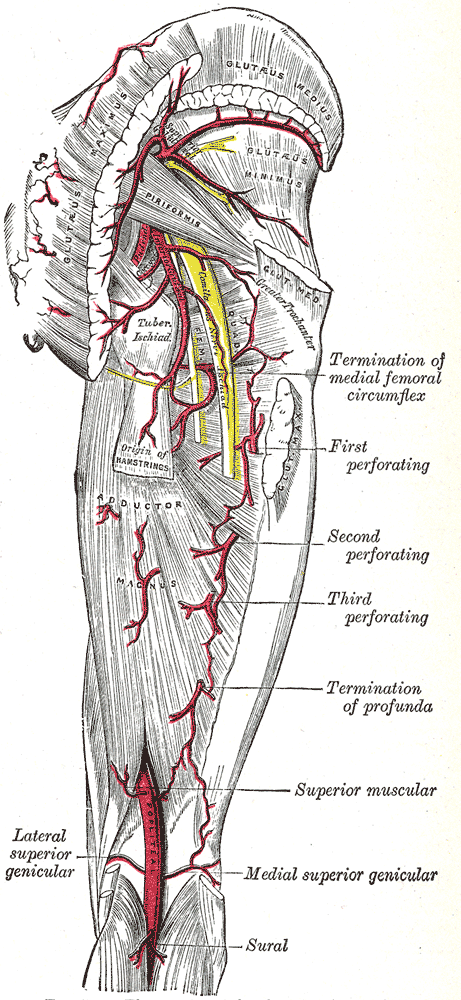
The superficial branch enters the deep surface of the Glutæus maximus, and divides into numerous branches, some of which supply the muscle and anastomose with the inferior gluteal, while others perforate its tendinous origin, and supply the integument covering the posterior surface of the sacrum, anastomosing with the posterior branches of the lateral sacral arteries.

Deep branch

The deep branch lies under the Glutæus medius and almost immediately subdivides into two.

Of these, the superior division, continuing the original course of the vessel, passes along the upper border of the Glutæus minimus to the anterior superior spine of the ilium, anastomosing with the deep iliac circumflex artery and the ascending branch of the lateral femoral circumflex artery.

The inferior division crosses the Glutæus minimus obliquely to the greater trochanter, distributing branches to the Glutæi and anastomoses with the lateral femoral circumflex artery.

Some branches pierce the Glutæus minimus and supply the hip-joint.

See also

Additional images

External links

This article was originally based on an entry from a public domain edition of Gray's Anatomy. As such, some of the information contained herein may be outdated. Please edit the article if this is the case, and feel free to remove this notice when it is no longer relevant.


WikiDoc Help Menu

Quick Start..

Editing basics

Advanced editing

Communicating your edits

Help Videos You Can Watch

Acknowledgement and Attribution Regarding Sources of Content

Some of the initial content on this page may be incorporated in part from copyleft sources in the public domain including wikis such as Wikipedia and AskDrWiki. Drug information for patients came from the The National Library of Medicine. Infectious disease information may have come from the Centers for Disease Control (CDC). Differential Diagnoses are drawn from clinicians as well as an amalgamation of 3 sources: 1.The Disease Database; 2. Kahan, Scott, Smith, Ellen G. In A Page: Signs and Symptoms. Malden, Massachusetts: Blackwell Publishing, 2004:3; 3. Sailer, Christian, Wasner, Susanne. Differential Diagnosis Pocket. Hermosa Beach, CA: Borm Bruckmeir Publishing LLC, 2002:7 .