Spermatogonium
|
WikiDoc Resources for Spermatogonium |
|
Articles |
|---|
|
Most recent articles on Spermatogonium Most cited articles on Spermatogonium |
|
Media |
|
Powerpoint slides on Spermatogonium |
|
Evidence Based Medicine |
|
Clinical Trials |
|
Ongoing Trials on Spermatogonium at Clinical Trials.gov Trial results on Spermatogonium Clinical Trials on Spermatogonium at Google
|
|
Guidelines / Policies / Govt |
|
US National Guidelines Clearinghouse on Spermatogonium NICE Guidance on Spermatogonium
|
|
Books |
|
News |
|
Commentary |
|
Definitions |
|
Patient Resources / Community |
|
Patient resources on Spermatogonium Discussion groups on Spermatogonium Patient Handouts on Spermatogonium Directions to Hospitals Treating Spermatogonium Risk calculators and risk factors for Spermatogonium
|
|
Healthcare Provider Resources |
|
Causes & Risk Factors for Spermatogonium |
|
Continuing Medical Education (CME) |
|
International |
|
|
|
Business |
|
Experimental / Informatics |
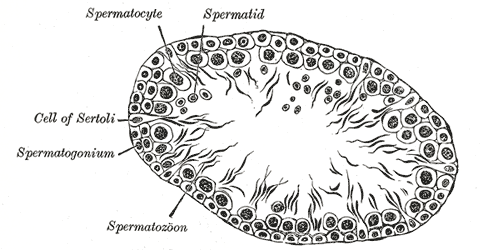
A spermatogonium (plural: spermatogonia) is an intermediary male gametogonium (a kind of germ cell) in the production of spermatozoa.
There are two subtypes:
Type A(d) cells have dark nuclei and they divide to produce copies of themselves, thereby ensuring a constant supply of spermatogonia to fuel spermatogenesis.
Type A(p) cells have pale nuclei and they divide by mitosis to produce Type B cells and these Type B cells divide again to give rise to primary spermatocytes.
Each primary spermatocyte duplicates its DNA and subsequently undergoes meiosis I to produce two haploid secondary spermatocytes. Each of the two secondary spermatocytes further undergo meiosis II to produce two spermatids (haploid). (1 primary spermatocytes => 4 spermatids)
The spermatids then undergo spermiogenesis to produce spermatozoa.
Additional images
-
-
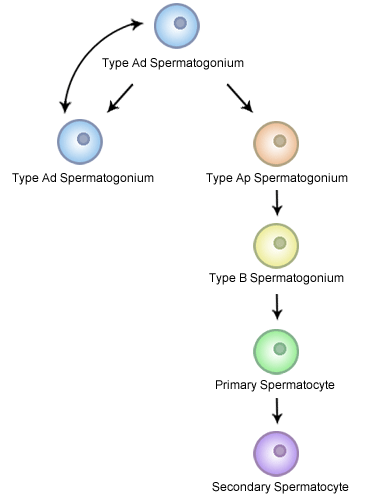 Schematic diagram of Spermatocytogenesis


Source
This article includes material from Biology Online.