Muscularis mucosae
The lamina muscularis mucosae (or "muscularis mucosa") is the thin layer of smooth muscle found in most parts of the gastrointestinal tract, located outside the lamina propria mucosae and separating it from the submucosa.
In the gastrointestinal tract, the term mucosa or "mucous membrane" refers to the combination of epithelium, lamina propria, and (where it occurs) muscularis mucosa.[1] The etymology suggests this since the Latin names translate to "the mucosa's own special layer" (lamina propria mucosae) and "muscular layer of the mucosa" (lamina muscularis mucosae).
The muscularis mucosa is composed of several thin layers of smooth muscle fibers oriented in different ways which keeps the mucosal surface and underlying glands in a constant state of gentle agitation to expel contents of glandular crypts and enhance contact between epithelium and the contents of the lumen.
References
- ↑ H.G. Burkitt et al., Wheater's Functional Histology, 3rd ed.
Additional images
-
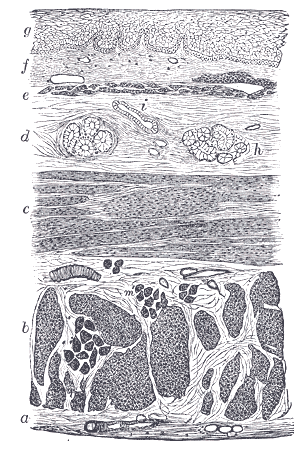 Section of the human esophagus. Moderately magnified.
 -
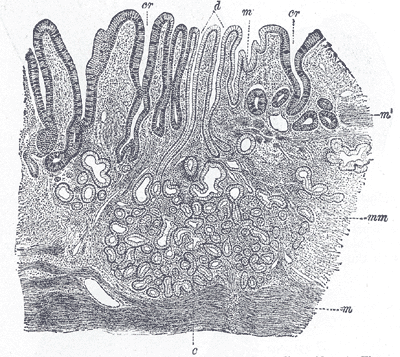 Section of mucous membrane of human stomach, near the cardiac orifice.
 -
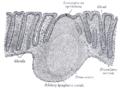 Section of mucous membrane of human rectum. X 60.
 -
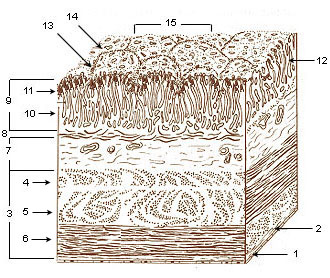 Layers of stomach wall
 -
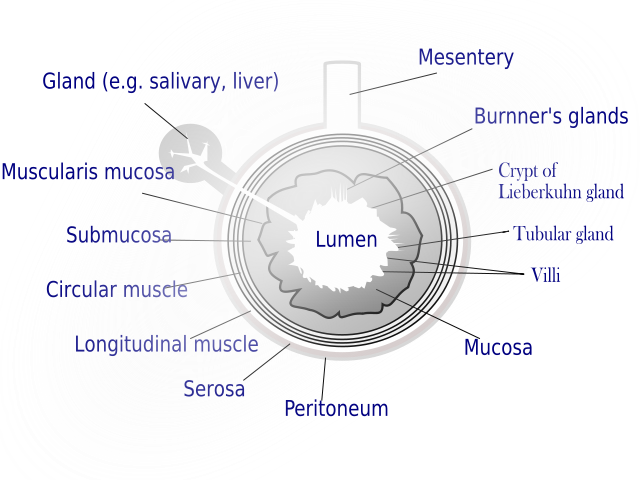 General structure of the gut wall showing the Muscularis mucosa.


External links
- Template:BiowebUW
- Template:EMedicineDictionary
- Template:OklahomaHistology - "Lung"
- Essentials of Human Physiology by Thomas M. Nosek. Section 6/6ch1/s6ch1_11.
- Template:UCDavisOrganology - "Mammal, whole system (LM, Low)"
- Template:UIUCHistologySubject