Intervertebral disc
Intervertebral discs (or intervertebral fibrocartilage) lie between adjacent vertebrae in the spine. Each disc forms a cartilaginous joint to allow slight movement of the vertebrae, and acts as a ligament to hold the vertebrae together.
Structure
Discs consist of an outer annulus fibrosus, which surrounds the inner nucleus pulposus. The annulus fibrosus consists of several layers of fibrocartilage. The strong annular fibers contain the nucleus pulposus and distribute pressure evenly across the disc. The nucleus pulposus contains loose fibers suspended in a mucoprotein gel the consistency of jelly. The nucleus of the disc acts as a shock absorber, absorbing the impact of the body's daily activities and keeping the two vertebrae separated. The disc can be likened to a doughnut: whereby the annulus fibrosis is similar to the dough and the nucleus pulposis is the jelly. If one presses down on the front of the doughnut the jelly moves posteriorly or to the back. When one develops a prolapsed disc the jelly/ nucleus pulposis is forced out of the doughnut/ disc and may put pressure on the nerve located near the disc. This will give one the symptoms of sciatica.

There is one disc between each pair of vertebrae, except for the first cervical segment, the atlas. The atlas is a ring around the roughly cone-shaped extension of the axis (second cervical segment). The axis acts as a post around which the atlas can rotate, allowing the neck to swivel. There are a total of twenty-three discs in the spine, which are identified by specifying the particular vertebrae they separate. For example, the disc between the fifth and sixth cervical vertabrae is designated "C5-6".
As people age, the nucleus pulposus begins to dehydrate, which limits its ability to absorb shock. The annulus fibrosus gets weaker with age and begins to tear. While this may not cause pain in some people, in others one or both of these may cause chronic pain.
Pain due to the inability of the dehydrating nucleus pulposus to absorb shock is called axial pain or disc space pain. One generally refers to the gradual dehydration of the nucleus pulposus as degenerative disc disease.
When the annulus fibrosus tears due to an injury or the aging process, the nucleus pulposus can begin to extrude through the tear. This is called disc herniation. Near the posterior side of each disc, all along the spine, major spinal nerves extend out to different organs, tissues, extremities etc. It is very common for the herniated disc to press against these nerves (pinched nerve) causing radiating pain, numbness, tingling, and diminished strength and/or range of motion. In addition, the contact of the inner nuclear gel, which contains inflammatory proteins, with a nerve can also cause significant pain. Nerve-related pain is called radicular pain.
Herniated discs go by many names and these can mean different things to different medical professionals. A slipped disc, ruptured disc, or a bulging disc can all refer to the same medical condition.
Protrusions of the disc into the adjacent vertebra are known as Schmorl's nodes.
See also
Additional images
-
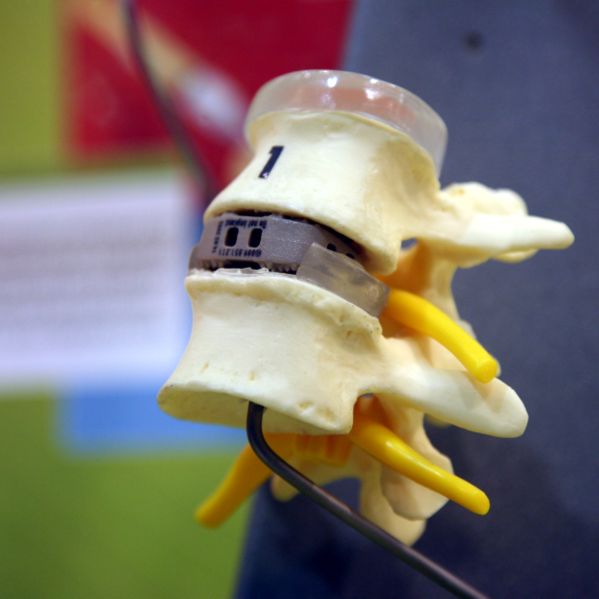
Artificial intervertebral disc
-
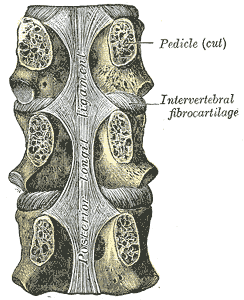
Posterior longitudinal ligament, in the thoracic region.
-
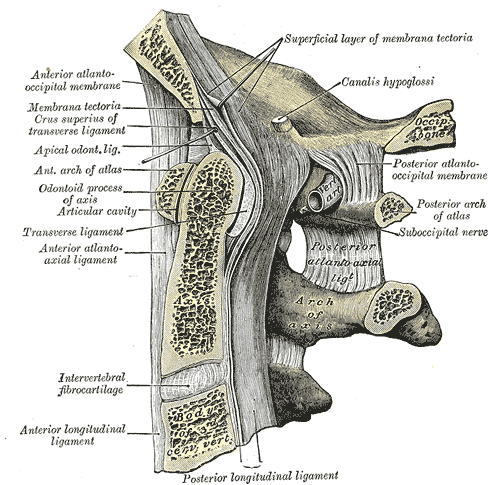
Median sagittal section through the occipital bone and first three cervical vertebræ.
-
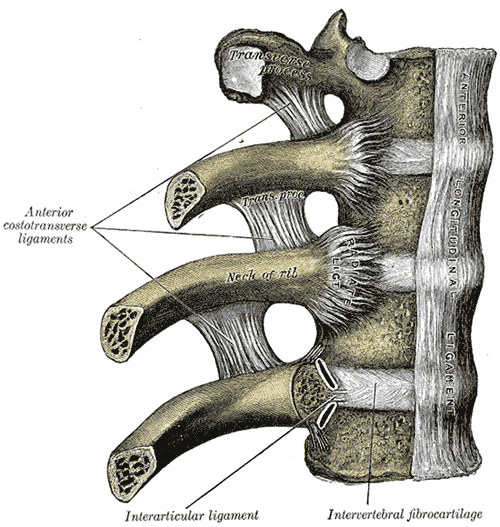
Costovertebral articulations. Anterior view.


External links
de:Bandscheibe eo:Intervertebra disko he:דיסק בין-חולייתי nl:Tussenwervelschijf sv:Mellankotskiva