Hyoid bone
|
WikiDoc Resources for Hyoid bone |
|
Articles |
|---|
|
Most recent articles on Hyoid bone |
|
Media |
|
Evidence Based Medicine |
|
Clinical Trials |
|
Ongoing Trials on Hyoid bone at Clinical Trials.gov Clinical Trials on Hyoid bone at Google
|
|
Guidelines / Policies / Govt |
|
US National Guidelines Clearinghouse on Hyoid bone
|
|
Books |
|
News |
|
Commentary |
|
Definitions |
|
Patient Resources / Community |
|
Patient resources on Hyoid bone Discussion groups on Hyoid bone Patient Handouts on Hyoid bone Directions to Hospitals Treating Hyoid bone Risk calculators and risk factors for Hyoid bone
|
|
Healthcare Provider Resources |
|
Causes & Risk Factors for Hyoid bone |
|
Continuing Medical Education (CME) |
|
International |
|
|
|
Business |
|
Experimental / Informatics |
Editor-In-Chief: C. Michael Gibson, M.S., M.D. [1]
Overview
The hyoid bone (Lingual Bone) is a bone in the human neck, and is the only bone in the skeleton not articulated to any other bone. It is supported by the muscles of the neck and in turn supports the root of the tongue.
The hyoid bone is shaped like a horseshoe, and is suspended from the tips of the styloid processes of the temporal bones by the stylohyoid ligaments.
Segments
It consists of five segments:
Ossification
The hyoid is ossified from six centers: two for the body, and one for each cornu. Ossification commences in the greater cornua toward the end of fetal life, in the body shortly afterward, and in the lesser cornua during the first or second year after birth.
Muscle attachments
The following muscles attach to the hyoid:[1]
- superior
- inferior
Function
The hyoid bone is involved in the production of human speech. It allows a wider range of tongue and laryngeal movements by bracing these structures against each other. It is not present in any of our closest living relatives, but it did exist in virtually identical form in Neanderthal man. That suggests, along with other anthropological clues of communication, that the Neanderthal employed some form of spoken language.
Fracture
Due to its position, the hyoid bone is not usually easy to fracture in most situations.
In cases of suspicious death, a fractured hyoid is a strong sign of strangulation.
Etymology
Its name is derived from the Greek word hyoeides meaning "shaped like the letter upsilon" (υ).
Additional images
-

Larynx
-
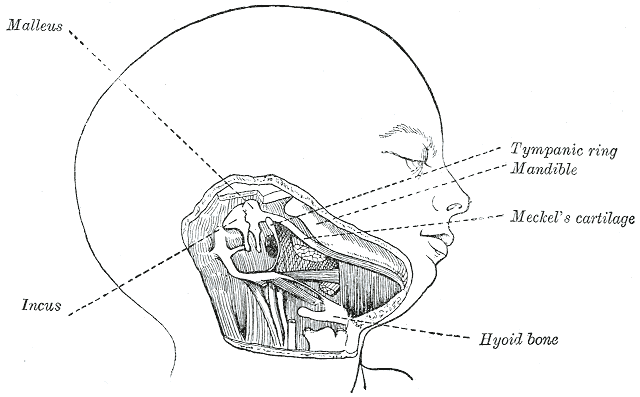
Head and neck of a human embryo eighteen weeks old, with Meckel’s cartilage and hyoid bar exposed.
-
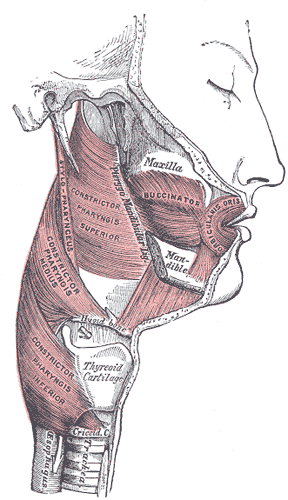
Muscles of the pharynx and cheek.
-

Muscles of the neck. Lateral view.
-
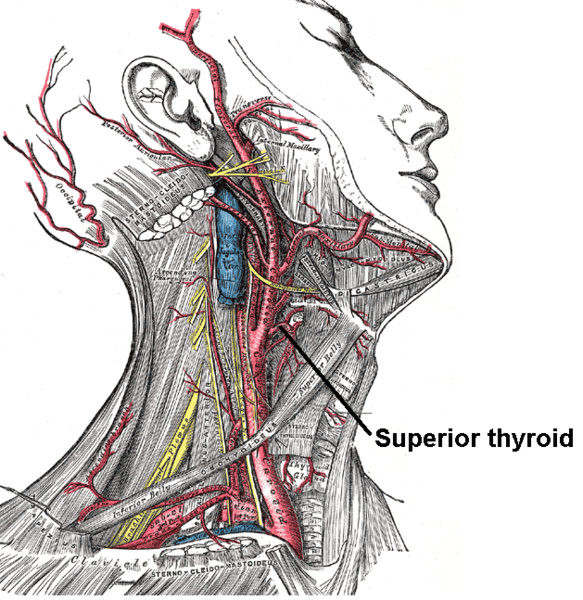
The internal carotid and vertebral arteries. Right side.
-
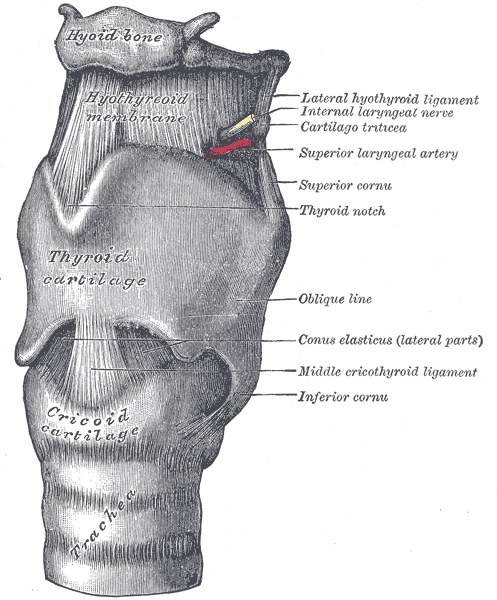
The ligaments of the larynx. Antero-lateral view.
-
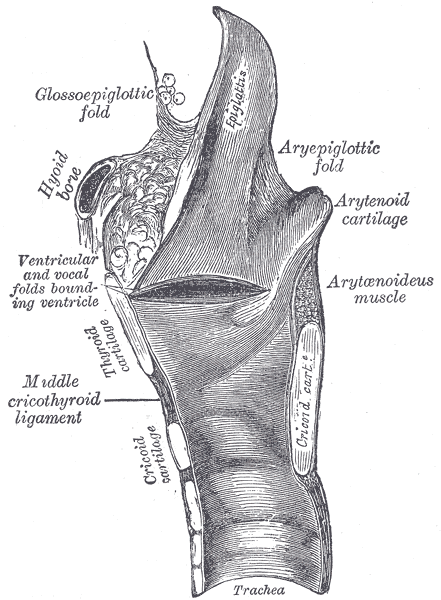
Sagittal section of the larynx and upper part of the trachea.
-
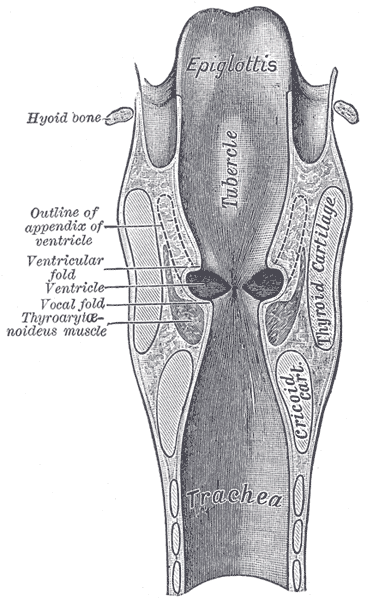
Coronal section of larynx and upper part of trachea.
-
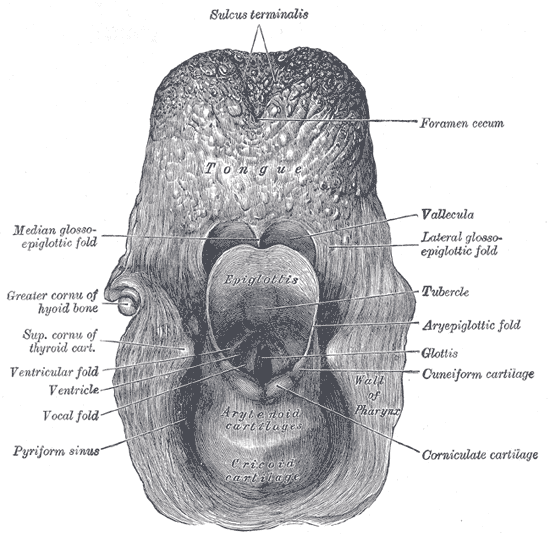
The entrance to the larynx, viewed from behind.
-
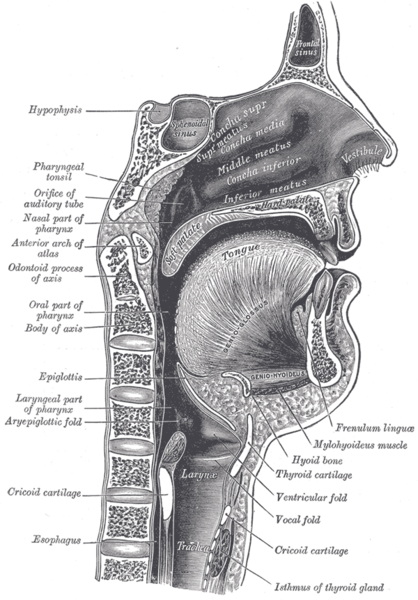
Sagittal section of nose mouth, pharynx, and larynx.
-
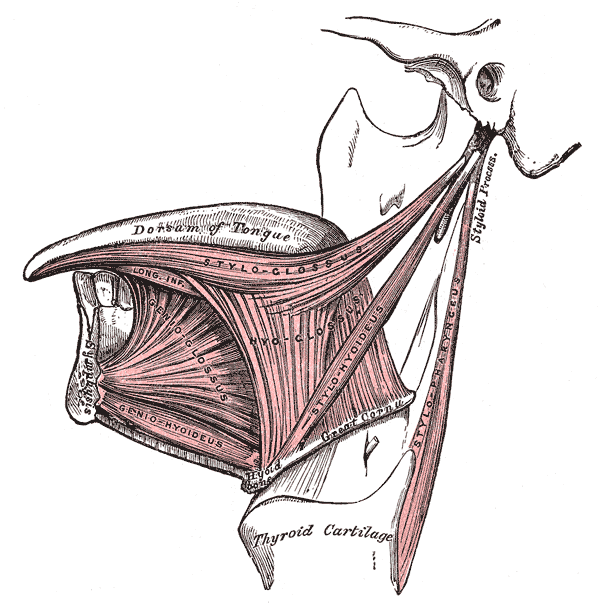
Extrinsic muscles of the tongue. Left side.
-
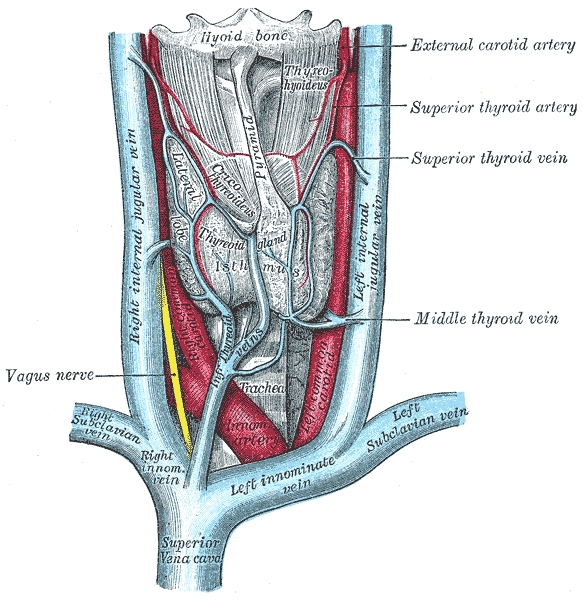
The thyroid gland and its relations.
-
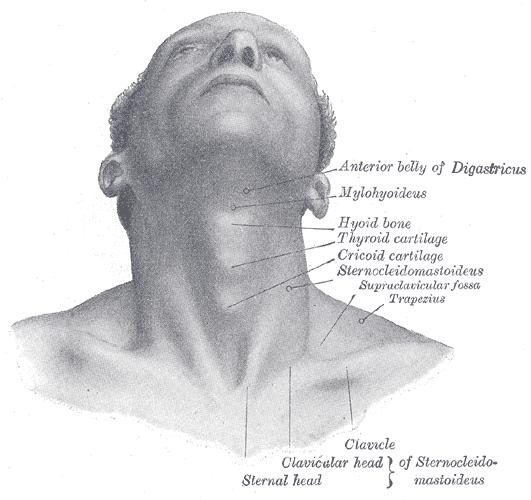
Front view of neck.


See also
References
External links
- Template:SUNYAnatomyLabs - "Anterior Triangle of the Neck: The Muscular Triangle"
- Template:RocheLexicon
- Template:NormanAnatomy (Template:NormanAnatomyFig)
bg:Подезична кост de:Zungenbein eo:Hioido lt:Poliežuvinis kaulas nl:Tongbeen sk:Jazylka sl:Podjezičnica fi:Kieliluu sv:Tungben ta:தொண்டை எலும்பு uk:Під'язикова кістка