Floating rib
|
WikiDoc Resources for Floating rib |
|
Articles |
|---|
|
Most recent articles on Floating rib Most cited articles on Floating rib |
|
Media |
|
Powerpoint slides on Floating rib |
|
Evidence Based Medicine |
|
Clinical Trials |
|
Ongoing Trials on Floating rib at Clinical Trials.gov Clinical Trials on Floating rib at Google
|
|
Guidelines / Policies / Govt |
|
US National Guidelines Clearinghouse on Floating rib
|
|
Books |
|
News |
|
Commentary |
|
Definitions |
|
Patient Resources / Community |
|
Patient resources on Floating rib Discussion groups on Floating rib Patient Handouts on Floating rib Directions to Hospitals Treating Floating rib Risk calculators and risk factors for Floating rib
|
|
Healthcare Provider Resources |
|
Causes & Risk Factors for Floating rib |
|
Continuing Medical Education (CME) |
|
International |
|
|
|
Business |
|
Experimental / Informatics |
Overview
Floating ribs are four atypical ribs (two lowermost pairs, XI-XII) in the human ribcage. They are called so because they are attached to the vertebrae only, and not to the sternum or cartilage coming off of the sternum. Some people are missing one of the two pairs. Others have a third pair. Most, however, possess only two pairs.
Their position can be permanently altered by a form of body modification called tightlacing, which uses a corset to compress and move the ribs.
See also
Additional images
-
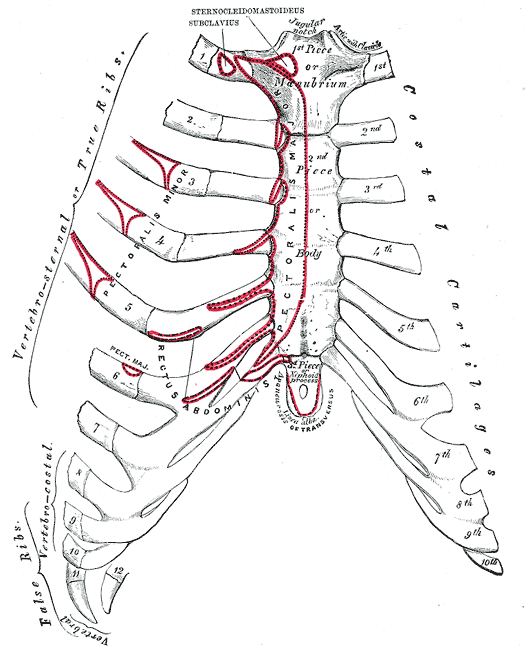
Anterior surface of sternum and costal cartilages.
-
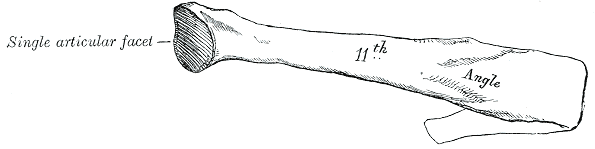
Eleventh rib.
-
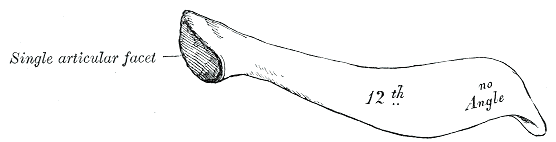
Twelfth rib.


