Epidermis (skin)


Editor-In-Chief: C. Michael Gibson, M.S., M.D. [1]
Epidermis is the outermost layer of the skin. It forms the waterproof, protective wrap over the body's surface and is made up of stratified squamous epithelium with an underlying basal lamina.
Components
The epidermis contains no blood vessels, and is nourished by diffusion from the dermis. The main type of cells which make up the epidermis are keratinocytes, melanocytes, Langerhans cells and Merkels cells.
Layers
The epidermis is divided into several layers where cells are formed through mitosis at the innermost layers. They move up the strata changing shape and composition as they differentiate and become filled with keratin. They eventually reach the top layer called stratum corneum and become sloughed off, or desquamated. This process is called keratinization and takes place within weeks. The outermost layer of epidermis consists of 25 to 30 layers of dead cells.
Sublayers
Epidermis is divided into the following 5 sublayers or strata, listed from the superficial to deep:
- Stratum corneum
- Stratum lucidum
- Stratum granulosum
- Stratum spinosum
- Stratum germinativum (also called "stratum basale")
Mnemonics used for remembering the layers of the skin (using "stratum basale" instead of "stratum germinativum"):
- "Corn Lovers Grow Several Bales" (from superficial to deep)
- "Before Signing, Get Legal Counsel" (from deep to superficial)
Additional images
-
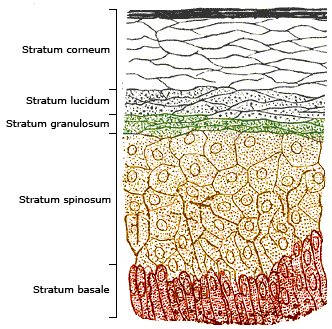 Section of epidermis.
 -
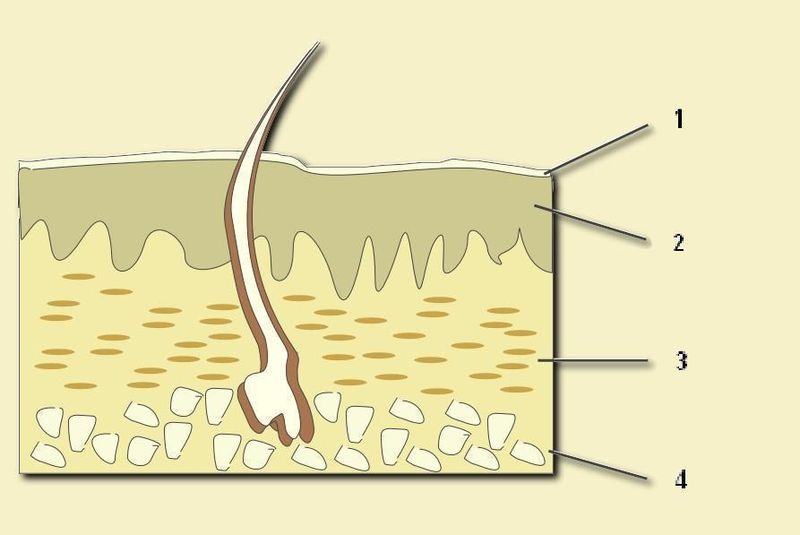 Skin layers.
 -
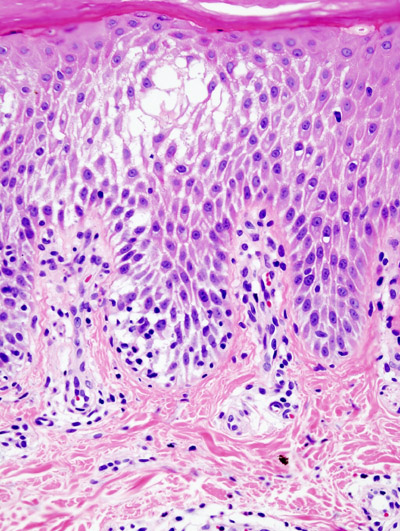 Histopathological image of dyshidrotic dermatitis, showing focal spngiotic change in the epidermis.
 -
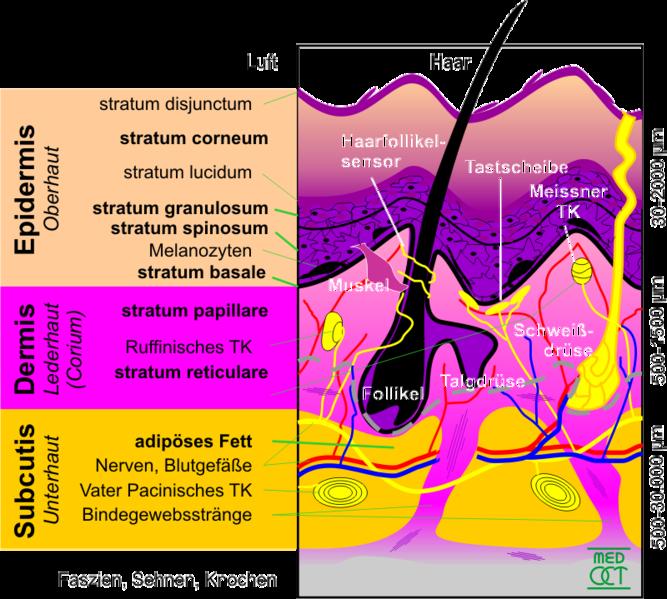 Schematics of external human skin depicting its inner structure.
 -
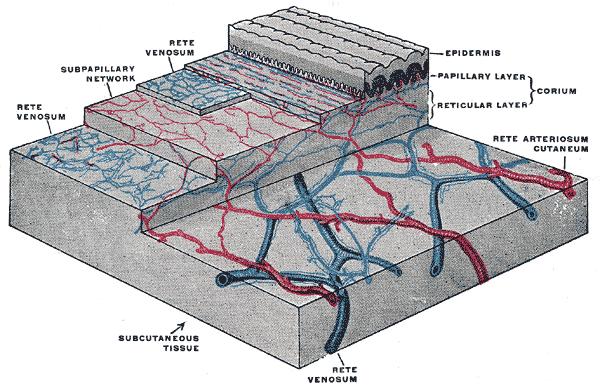 The distribution of the bloodvessels in the skin of the sole of the foot.
 -
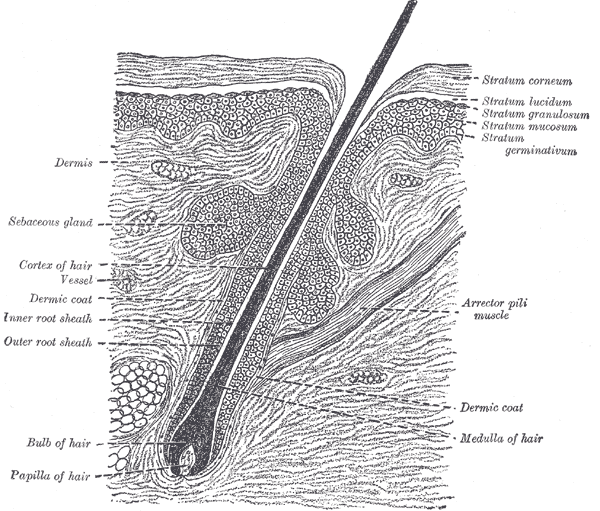 Cross section showing layers of epidermis.


_Dyshidrotic_.JPG)


External links
- Histology image: 08422loa – Histology Learning System at Boston University - "Integument: thick skin"
Template:Integumentary system
bg:Епидермис
de:Epidermis (Säugetiere)
eo:Epidermo
he:אפידרמיס
hr:Epiderma
lt:Epidermis
nl:Epidermis
sr:Покожица
fi:Orvaskesi
sv:Överhuden
th:หนังกำพร้า
uk:Епідерма