Acrochordon
| Acrochordon | |
 | |
|---|---|
| Skin tag on adult woman's upper cheek | |
| ICD-10 | L91.8 (congenitalQ82.8) |
| ICD-9 | 216 |
| OMIM | 109400 |
| DiseasesDB | 33273 |
| MedlinePlus | 000848 |
| eMedicine | derm/606 |
Editor-In-Chief: C. Michael Gibson, M.S., M.D. [1] Associate Editor(s)-in-Chief: Jesus Rosario Hernandez, M.D. [2].
Synonyms and keywords:: Skin tag; pedunculated papilloma; fibroepithelial polyp.
Overview
An acrochordon (a.k.a. skin tag, pedunculated papilloma or fibroepithelial polyp) is a small benign tumor that forms primarily in areas where the skin forms creases, such as the neck, armpits and groin. They may also occur on the face, usually on the eyelids. Though larger have been seen, they usually range in size from grain of rice to that of a golf ball. The surface of acrochorda may be smooth or irregular in appearance. They are often raised from the surface of the skin on a fleshy stalk called a peduncle. Microscopically, an acrochordon consists of a fibrovascular core, sometimes also with fat cells, covered by an unremarkable epidermis. Since they also contain nerve cells, acrochorda cannot be painlessly removed without anesthesia (usually local).
Skin tags are harmless, although they are sometimes irritated by clothing or jewelery and can interfere with shaving and other routine grooming. Why and how skin tags form is not entirely known, but there are correlations with age and obesity. Some also state that individuals with high stress levels tend to attain more acrochorda then other individuals. However, none of that has been scientifically proven. They are more common in people with diabetes mellitus and in pregnant women. Acrochorda have been reported to have an incidence of 46% in the general population[3]. A genetic component (causation) is thought to exist. Rarely, they can be associated with the Birt-Hogg-Dubé syndrome and Polycystic Ovary Syndrome.
Treatment
- Cauterization: with an electrolysis instrument
- Cryosurgery (freezing)
- Ligation: cutting off blood supply
- Excision: with a scalpel, or other surgical instrument
Each of these treatments is considered minor surgery, typically performed by a physician in the office. In some jurisdictions, an aesthetician is permitted to remove them with electrology. Since removal of skin tags is considered cosmetic, the procedure may not be covered by health care systems and medical insurance.
Physical examination
Gallery
-
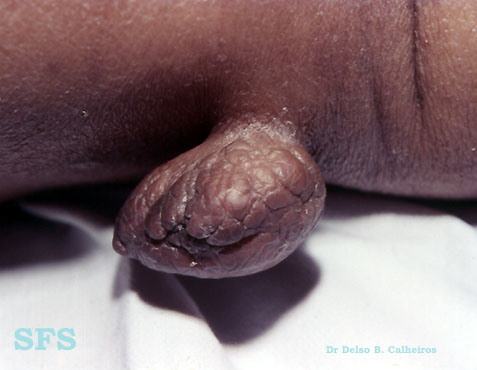
Acrochordon.
Adapted from [http://www.atlasdermatologico.com.br/disease.jsf?diseaseId=10 -
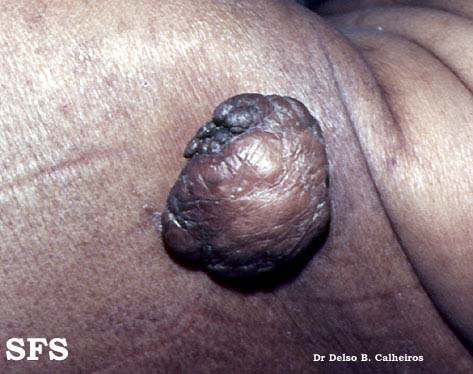
Acrochordon.
Adapted from [http://www.atlasdermatologico.com.br/disease.jsf?diseaseId=10 -
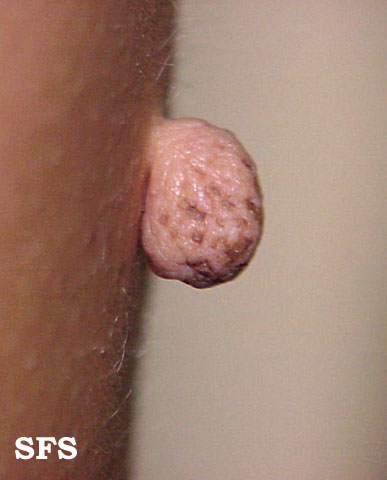
Acrochordon.
Adapted from [http://www.atlasdermatologico.com.br/disease.jsf?diseaseId=10


